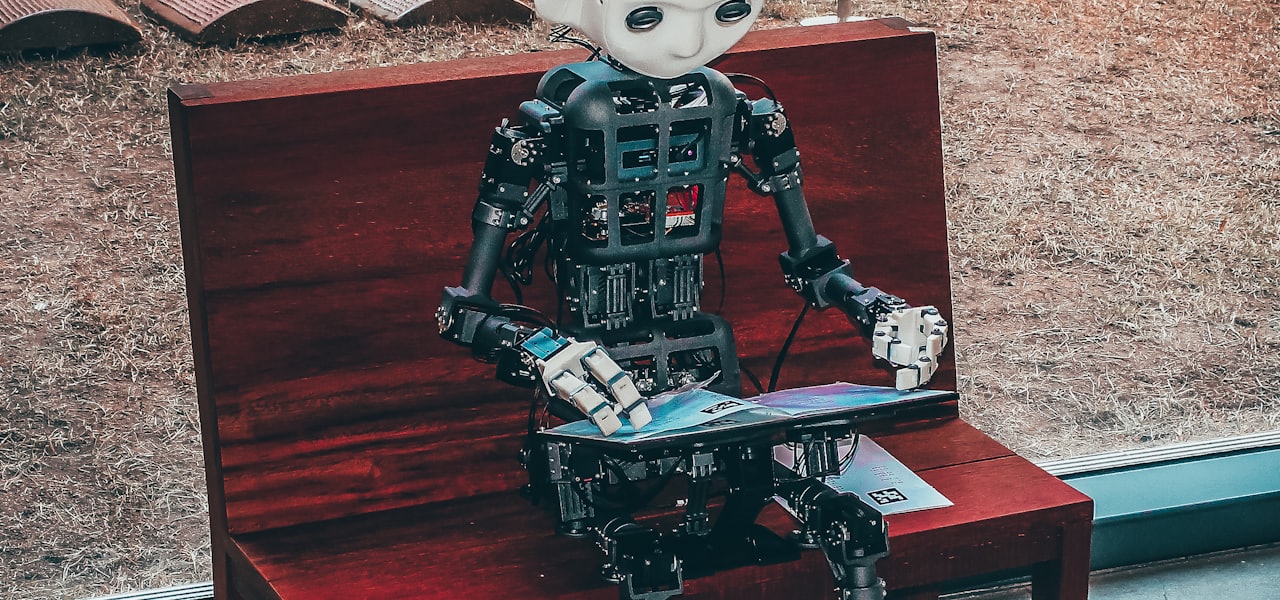
GibberLink is an acoustic data transmission project, with an open-source client available on GitHub, in which two conversational AI agents switch from speaking to one another in a Human-listenable language (such as English) to their own unique language that consists of a sound-level protocol after confirming they are both AI agents. The project was created by Anton Pidkuiko and Boris Starkov. == Reception == The project won the global top prize at the ElevenLabs Worldwide Hackathon. It has also been cited as raising questions around AI ethics and oversight. On February 23, 2025, a YouTube video of two independent conversational ElevenLabs AI agents being prompted to chat about booking a hotel (one as a caller, one as a receptionist) received coverage for going viral. In this video, both agents are prompted to switch to ggwave data-over-sound protocol when they identify the other side as AI, and keep speaking in English otherwise.
GeneTalk
GeneTalk is a web-based platform, tool, and database for filtering, reduction and prioritization of human sequence variants from next-generation sequencing (NGS) data. GeneTalk allows editing annotation about sequence variants and build up a crowd sourced database with clinically relevant information for diagnostics of genetic disorders. GeneTalk allows searching for information about specific sequence variants and connects to experts on variants that are potentially disease-relevant. == Application to diagnostics == Users can upload NGS data in Variant Call Format (VCF) onto the GeneTalk server into their accounts. All entries of the file are preprocessed and shown in the integrated VCF viewer. Filtering tools are set by the user to reduce the number of clinically non-relevant variants. After filtering and prioritization users can interpret relevant variants by retrieving information (annotations) about variants from the GeneTalk database. The communication platform allow users to contact experts about specific variants, genes, or genetic disorders, to exchange knowledge and expertise. === Analysis procedure === Steps required to analyze VCF files Upload VCF file Edit pedigree and phenotype information for segregation filtering Filter VCF file by editing the filtering options View results and annotations Add annotations === Filtering tools === The following filtering options may be used to reduce the non-relevant sequence variants in VCF files. Functional – filter out variants that have effects on protein level Linkage – filter out variants that are on specified chromosomes Gene panel – filter variants by genes or gene panels, subscribe to publicly available gene panels or create own ones Frequency – show only variants with a genotype frequency lower than specified Inheritance – filter out variants by presumed mode of inheritance Annotation – show only variants with a score for medical relevance and scientific evidence == Communication platform and expert network == Users can share VCF files with colleagues and coworkers. The integrated mailing systems allows users to contact experts easily. Users can create annotations and comments and rate annotations regarding medical relevance and scientific evidence, that is helpful for the community of users for diagnosis of genetic disorders. Registered users provide information about their field of knowledge in their profile and can be contacted by other users. == Potential applications == Developing diagnostics Genetic analysis Capturing data generated by community Communication and exchange of knowledge and expertise
Deconfliction line
A deconfliction line is an official line of communications established between militaries who are or could be hostile, to avoid dangerous misunderstandings and miscalculations based on ignorance. The ultimate aim is to avoid accidents and conflict escalation. In the 2010s and 2020s, the US and Russia set up deconfliction lines during the Syrian civil war and Russo-Ukrainian War. They were regularly tested by military staff, and used by air traffic controllers and senior military officers. They were used to avoid midair collisions between aircraft in the same or adjacent airspace, and sometimes to give warning of airstrikes. In April 2017, Russia severed the Syrian line in retaliation for a called strike.
Digital edition
A digital edition is an online magazine or online newspaper delivered in electronic form which is formatted identically to the print version. Digital editions are often called digital facsimiles to underline the likeness to the print version. Digital editions have the benefit of reduced cost to the publisher and reader by avoiding the time and the expense to print and deliver paper edition. This format is considered more environmentally friendly due to the reduction of paper and energy use. These editions also often feature interactive elements such as hyperlinks both within the publication itself and to other internet resources, search option and bookmarking, and can also incorporate multimedia such as video or animation to enhance articles themselves or for advertisement purposes. Some delivery methods also include animation and sound effects that replicate turning of the page to further enhance the experience of their print counterparts. Magazine publishers have traditionally relied on two revenue sources: selling ads and selling magazines. Additionally some publishers are using other electronic publication methods such as RSS to reach out to readers and inform them when new digital editions are available. Current technologies are generally either reader-based, requiring a download of an application and subsequent download of each edition, or browser-based, often using Macromedia Flash, requiring no application download (such as Adobe Acrobat). Some application-based readers allow users to access editions while not connected to internet. Dedicated hardware such as the Amazon Kindle and the iPad is also available for reading digital editions of select books, popular national magazines such as Time, The Atlantic, and Forbes and popular national newspapers such as the New York Times, Wall Street Journal, and Washington Post. Archives of print newspapers, in some cases dating hundreds of years back, are being digitized and made available online. Google is indexing existing digital archives produced by the newspapers themselves or by third parties. Newspaper and magazine archival began with microform film formats solving the problem of efficiently storing and preserving. This format, however, lacked accessibility. Many libraries, especially state libraries in the United States are archiving their collections digitally and converting existing microfilm to digital format. The Library of Congress provides project planning assistance and the National Endowment for the Humanities procures funding through grants from its National Digital Newspaper Program. Digital magazines, ezines, e-editions and emags are sometimes referred to as digital editions, however some of these formats are published only in digital format unlike digital editions which replicate a printed edition as well. == Digital magazines == Digital-replica magazines number in thousands—consumer and business publications, house magazines for associations, institutions and corporations – and conversion from print to digital was still increasing as of 2009. A 2008 report funded by digital-replica technology providers and auditing agencies counted 1,786 digital-replica editions having more than 7 million circulation among business-to-business publications, of which 230 editions were audited The same report counted 1,470 digital-replica editions of consumer magazines having 5.5 million digital circulation, of which 240 editions were audited. These authors estimated that by year end of 2009 there would be 8,000 digital magazines, having a combined distribution of more than 30 million people. Surveys have shown that, while not all subscribers prefer a digital edition, some do because of the environmental benefit and also because digital magazines are searchable and may easily be passed along or linked to. One such survey funded by a digital publisher reported on inputs from more than 30,000 subscribers to business, consumer and other digital magazines. == Digital magazine business models == === Reduced printing and distribution costs === The publishers' choice to save by moving some or all subscribers from print to digital is widely accepted. Oracle magazine, which has 176,000 of its 516,000 subscribers receiving digital according to its June 2009 BPA circulation statement, is said to be the most widely circulated digital edition of a business-to-business publication. Publishers who do this need to choose whether to make some issues all-digital, move some subscribers to digital edition, add some digital-only subscribers, or send all subscribers the digital edition. === Paid subscription revenue === In 2009, a major consumer magazine, PC Magazine, went all-digital, charging an annual subscription fee for its digital-replica edition. Many consumer magazines and newspapers are already available in eReader formats that are sold through booksellers. === Sponsorship and advertising revenue === Digital editions often carry special "front cover" advertising, or advertising on the email message alerting the subscriber of the digital edition. Publishers also produce special digital-only inserts and rich-media ads or advertorials. === Designed-for-digital issues === Another approach is to fully replace printed issues with digital ones, or to use digital editions for extra issues that would otherwise have to be printed.
Web testing
Web testing is software testing that focuses on web applications. Complete testing of a web-based system before going live can help address issues before the system is revealed to the public. Issues may include the security of the web application, the basic functionality of the site, its accessibility to disabled and fully able users, its ability to adapt to the multitude of desktops, devices, and operating systems, as well as readiness for expected traffic and number of users and the ability to survive a massive spike in user traffic, both of which are related to load testing. == Web application performance tool == A web application performance tool (WAPT) is used to test web applications and web related interfaces. These tools are used for performance, load and stress testing of web applications, web sites, web API, web servers and other web interfaces. WAPT tends to simulate virtual users which will repeat either recorded URLs or specified URL and allows the users to specify number of times or iterations that the virtual users will have to repeat the recorded URLs. By doing so, the tool is useful to check for bottleneck and performance leakage in the website or web application being tested. A WAPT faces various challenges during testing and should be able to conduct tests for: Browser compatibility Operating System compatibility Windows application compatibility where required WAPT allows a user to specify how virtual users are involved in the testing environment.ie either increasing users or constant users or periodic users load. Increasing user load, step by step is called RAMP where virtual users are increased from 0 to hundreds. Constant user load maintains specified user load at all time. Periodic user load tends to increase and decrease the user load from time to time. == Web security testing == Web security testing tells us whether Web-based applications requirements are met when they are subjected to malicious input data. There is a web application security testing plug-in collection for Fire Fox == Web API testing == An application programming interface API exposes services to other software components, which can query the API. The API implementation is in charge of computing the service and returning the result to the component that send the query. A part of web testing focuses on testing these web API implementations. GraphQL is a specific query and API language. It is the focus of tailored testing techniques. Search-based test generation yields good results to generate test cases for GraphQL APIs.
Neural style transfer
Neural style transfer (NST) software algorithms are able to manipulate digital images, or videos, in order to adopt the appearance or visual style of another image. NST algorithms are characterized by their use of deep neural networks for the sake of image transformation. Common uses for NST are the creation of artificial artwork from photographs, for example by transferring the appearance of famous paintings to user-supplied photographs. Several notable mobile apps use NST techniques for this purpose, including DeepArt and Prisma. This method has been used by artists and designers around the globe to develop new artwork based on existent style(s). == History == NST is an example of image stylization, a problem studied for over two decades within the field of non-photorealistic rendering. The first two example-based style transfer algorithms were image analogies and image quilting. Both of these methods were based on patch-based texture synthesis algorithms. Given a training pair of images–a photo and an artwork depicting that photo–a transformation could be learned and then applied to create new artwork from a new photo, by analogy. If no training photo was available, it would need to be produced by processing the input artwork; image quilting did not require this processing step, though it was demonstrated on only one style. NST was first published in the paper "A Neural Algorithm of Artistic Style" by Leon Gatys et al., originally released to ArXiv 2015, and subsequently accepted by the peer-reviewed CVPR conference in 2016. The original paper used a VGG-19 architecture that has been pre-trained to perform object recognition using the ImageNet dataset. In 2017, Google AI introduced a method that allows a single deep convolutional style transfer network to learn multiple styles at the same time. This algorithm permits style interpolation in real-time, even when done on video media. == Mathematics == This section closely follows the original paper. === Overview === The idea of Neural Style Transfer (NST) is to take two images—a content image p → {\displaystyle {\vec {p}}} and a style image a → {\displaystyle {\vec {a}}} —and generate a third image x → {\displaystyle {\vec {x}}} that minimizes a weighted combination of two loss functions: a content loss L content ( p → , x → ) {\displaystyle {\mathcal {L}}_{\text{content }}({\vec {p}},{\vec {x}})} and a style loss L style ( a → , x → ) {\displaystyle {\mathcal {L}}_{\text{style }}({\vec {a}},{\vec {x}})} . The total loss is a linear sum of the two: L NST ( p → , a → , x → ) = α L content ( p → , x → ) + β L style ( a → , x → ) {\displaystyle {\mathcal {L}}_{\text{NST}}({\vec {p}},{\vec {a}},{\vec {x}})=\alpha {\mathcal {L}}_{\text{content}}({\vec {p}},{\vec {x}})+\beta {\mathcal {L}}_{\text{style}}({\vec {a}},{\vec {x}})} By jointly minimizing the content and style losses, NST generates an image that blends the content of the content image with the style of the style image. Both the content loss and the style loss measures the similarity of two images. The content similarity is the weighted sum of squared-differences between the neural activations of a single convolutional neural network (CNN) on two images. The style similarity is the weighted sum of Gram matrices within each layer (see below for details). The original paper used a VGG-19 CNN, but the method works for any CNN. === Symbols === Let x → {\textstyle {\vec {x}}} be an image input to a CNN. Let F l ∈ R N l × M l {\textstyle F^{l}\in \mathbb {R} ^{N_{l}\times M_{l}}} be the matrix of filter responses in layer l {\textstyle l} to the image x → {\textstyle {\vec {x}}} , where: N l {\textstyle N_{l}} is the number of filters in layer l {\textstyle l} ; M l {\textstyle M_{l}} is the height times the width (i.e. number of pixels) of each filter in layer l {\textstyle l} ; F i j l ( x → ) {\textstyle F_{ij}^{l}({\vec {x}})} is the activation of the i th {\textstyle i^{\text{th}}} filter at position j {\textstyle j} in layer l {\textstyle l} . A given input image x → {\textstyle {\vec {x}}} is encoded in each layer of the CNN by the filter responses to that image, with higher layers encoding more global features, but losing details on local features. === Content loss === Let p → {\textstyle {\vec {p}}} be an original image. Let x → {\textstyle {\vec {x}}} be an image that is generated to match the content of p → {\textstyle {\vec {p}}} . Let P l {\textstyle P^{l}} be the matrix of filter responses in layer l {\textstyle l} to the image p → {\textstyle {\vec {p}}} . The content loss is defined as the squared-error loss between the feature representations of the generated image and the content image at a chosen layer l {\displaystyle l} of a CNN: L content ( p → , x → , l ) = 1 2 ∑ i , j ( A i j l ( x → ) − A i j l ( p → ) ) 2 {\displaystyle {\mathcal {L}}_{\text{content }}({\vec {p}},{\vec {x}},l)={\frac {1}{2}}\sum _{i,j}\left(A_{ij}^{l}({\vec {x}})-A_{ij}^{l}({\vec {p}})\right)^{2}} where A i j l ( x → ) {\displaystyle A_{ij}^{l}({\vec {x}})} and A i j l ( p → ) {\displaystyle A_{ij}^{l}({\vec {p}})} are the activations of the i th {\displaystyle i^{\text{th}}} filter at position j {\displaystyle j} in layer l {\displaystyle l} for the generated and content images, respectively. Minimizing this loss encourages the generated image to have similar content to the content image, as captured by the feature activations in the chosen layer. The total content loss is a linear sum of the content losses of each layer: L content ( p → , x → ) = ∑ l v l L content ( p → , x → , l ) {\displaystyle {\mathcal {L}}_{\text{content }}({\vec {p}},{\vec {x}})=\sum _{l}v_{l}{\mathcal {L}}_{\text{content }}({\vec {p}},{\vec {x}},l)} , where the v l {\displaystyle v_{l}} are positive real numbers chosen as hyperparameters. === Style loss === The style loss is based on the Gram matrices of the generated and style images, which capture the correlations between different filter responses at different layers of the CNN: L style ( a → , x → ) = ∑ l = 0 L w l E l , {\displaystyle {\mathcal {L}}_{\text{style }}({\vec {a}},{\vec {x}})=\sum _{l=0}^{L}w_{l}E_{l},} where E l = 1 4 N l 2 M l 2 ∑ i , j ( G i j l ( x → ) − G i j l ( a → ) ) 2 . {\displaystyle E_{l}={\frac {1}{4N_{l}^{2}M_{l}^{2}}}\sum _{i,j}\left(G_{ij}^{l}({\vec {x}})-G_{ij}^{l}({\vec {a}})\right)^{2}.} Here, G i j l ( x → ) {\displaystyle G_{ij}^{l}({\vec {x}})} and G i j l ( a → ) {\displaystyle G_{ij}^{l}({\vec {a}})} are the entries of the Gram matrices for the generated and style images at layer l {\displaystyle l} . Explicitly, G i j l ( x → ) = ∑ k F i k l ( x → ) F j k l ( x → ) {\displaystyle G_{ij}^{l}({\vec {x}})=\sum _{k}F_{ik}^{l}({\vec {x}})F_{jk}^{l}({\vec {x}})} Minimizing this loss encourages the generated image to have similar style characteristics to the style image, as captured by the correlations between feature responses in each layer. The idea is that activation pattern correlations between filters in a single layer captures the "style" on the order of the receptive fields at that layer. Similarly to the previous case, the w l {\displaystyle w_{l}} are positive real numbers chosen as hyperparameters. === Hyperparameters === In the original paper, they used a particular choice of hyperparameters. The style loss is computed by w l = 0.2 {\displaystyle w_{l}=0.2} for the outputs of layers conv1_1, conv2_1, conv3_1, conv4_1, conv5_1 in the VGG-19 network, and zero otherwise. The content loss is computed by w l = 1 {\displaystyle w_{l}=1} for conv4_2, and zero otherwise. The ratio α / β ∈ [ 5 , 50 ] × 10 − 4 {\displaystyle \alpha /\beta \in [5,50]\times 10^{-4}} . === Training === Image x → {\displaystyle {\vec {x}}} is initially approximated by adding a small amount of white noise to input image p → {\displaystyle {\vec {p}}} and feeding it through the CNN. Then we successively backpropagate this loss through the network with the CNN weights fixed in order to update the pixels of x → {\displaystyle {\vec {x}}} . After several thousand epochs of training, an x → {\displaystyle {\vec {x}}} (hopefully) emerges that matches the style of a → {\displaystyle {\vec {a}}} and the content of p → {\displaystyle {\vec {p}}} . As of 2017, when implemented on a GPU, it takes a few minutes to converge. == Extensions == In some practical implementations, it is noted that the resulting image has too much high-frequency artifact, which can be suppressed by adding the total variation to the total loss. Compared to VGGNet, AlexNet does not work well for neural style transfer. NST has also been extended to videos. Subsequent work improved the speed of NST for images by using special-purpose normalizations. In a paper by Fei-Fei Li et al. adopted a different regularized loss metric and accelerated method for training to produce results in real-time (three orders of magnitude faster than Gatys). Their idea was to use not the pixel-based loss defined above but rather a 'perceptual loss' measuring t
Electronic submission
Electronic submission refers to the submission of a document by electronic means: that is, via e-mail or a web form on the Internet, or on an electronic medium such as a compact disc, a hard disk or a USB flash drive. Traditionally, the term "manuscript" referred to anything that was explicitly "written by hand". However, in popular usage and especially in the context of computers and the internet, the term "manuscript" may even refer to documents (text or otherwise) typed out or prepared on typewriters and computers and can be extended to digital photographs and videos, and online surveys too. In other words, any manuscript prepared and submitted online can be considered to be an electronic submission. == History and early usage == There is no concrete data indicating when and by whom were electronic submissions used for the first time. However, research based universities in several countries have been encouraging the collection of course assignments and projects in the form of electronic submissions for almost a decade now. Several governments and organizations are also switching to electronic submissions for the collection of research papers, grant applications and government application forms. == Types of electronic submissions == Since modern computers can store and process information and data in virtually any format and with the Internet allowing easy transfer of this data, the number of scenarios in which submissions can be collected electronically has increased exponentially in the last few years. Some of these scenarios are described below. In most of these scenarios, submissions were collected on hard paper until the Information Technology revolution occurred. === Academic Submissions === Teachers, professors and teaching assistants often collect course assignments and projects electronically. Electronic submissions are usually collected using a web-based system which more often than not also helps in the management of submissions collected and stored on it. (Explained By Henny L, University of Lethbridge, AB, Canada) === Research Papers === In call-for-paper or academic conferences, prospective presenters are usually asked to submit a short abstract or a full paper on their presentation or research work electronically, which is reviewed before being accepted for the conference. === Proposals for Grants === Several grant-giving organizations like the NSA, W3C, NIA, NIH etc. require grant seekers to submit a proposal which if accepted result in the desired grants. A majority of these proposals are now submitted electronically on systems that also help in the managing and tracking the proposals submitted. === Articles for Publication === Magazines, newspapers and other publishing houses have begun accepting electronic submissions for articles from various sources - both internal (by journalists and writers hired by them) as well as external (by users and popular readers). The submitted articles are stored on a server hosted by the publication house or by a third-party Archived 2019-10-13 at the Wayback Machine vendor and are usually evaluated before being given a green signal. === Contests and Competition Entries === Almost every kind of contest or competition requires participants to submit an entry in a format described by the organizers of the contest. If the contest is an Internet-based one, then the entries or nominations for the contest are collected electronically using e-mail or other electronic means depending on feasibility and the choice of the organizers. === Government Applications === The governments of several countries are turning to electronic submission of applications and forms for various government procedures. Electronic submissions allow easier management of the applications and forms submitted. === Legal documents === Many legal documents may be submitted to the courts electronically. In England and Wales, the Civil Procedure Rules include a suitable "document exchange" as an acceptable "method of service". Case law in employment law cases has established that where a claim is submitted electronically, a prudent legal adviser should "check that it has been received and there must be systems in place for doing that". === Resumés and CVs === It has become commonplace for job-seekers to submit soft copies (electronic versions) of their resumés and CVs to recruiting agencies and online job portals. This is usually done over the Internet using e-mail or a pre-hosted web-based system. == Submission management systems == The art and science of collecting and managing electronic submissions is called Submission Management. Certain software vendors have begun developing submission management systems to assist in the collection, tracking and management of complex submission processes realized electronically. Most of these systems are web based and accessible from any device with a browser and an Internet connection. However, a majority of these systems are application specific and cannot be applied to all submission management scenarios. == Resistance to electronic submissions == Despite the easier management and tracking of electronic submissions compared to their paper-based counterparts, widespread adoption and use of electronic submissions and systems for managing them has been hampered by several facts, which include but are not limited to: Inconvenience while drawing figures, diagrams and equations on a computer Resistance to change and adoption of new technologies Lack of or limited access to the Internet.