Generative design is an iterative design process that uses software to generate outputs that fulfill a set of constraints iteratively adjusted by a designer. Whether a human, test program, or artificial intelligence, the designer algorithmically or manually refines the feasible region of the program's inputs and outputs with each iteration to fulfill evolving design requirements. By employing computing power to evaluate more design permutations than a human alone is capable of, the process is capable of producing an optimal design that mimics nature's evolutionary approach to design through genetic variation and selection. The output can be images, sounds, architectural models, animation, and much more. It is, therefore, a fast method of exploring design possibilities that is used in various design fields such as art, architecture, communication design, and product design. Generative design has become more important, largely due to new programming environments or scripting capabilities that have made it relatively easy, even for designers with little programming experience, to implement their ideas. Additionally, this process can create solutions to substantially complex problems that would otherwise be resource-exhaustive with an alternative approach, making it a more attractive option for problems with a large or unknown solution set. It is also facilitated with tools in commercially available CAD packages. Not only are implementation tools more accessible, but also tools leveraging generative design as a foundation. Recent advancements have led to the development of Deep Generative Design, a framework that integrates topology optimization with deep learning models, such as Generative Adversarial Networks (GANs). Unlike traditional evolutionary methods that primarily focus on engineering performance, this approach uses deep generative models to enhance aesthetic diversity and novelty while simultaneously satisfying engineering constraints. For instance, research by Oh et al. (2019) proposed a framework using Boundary Equilibrium GANs (BEGAN) to generate diverse design options which are then refined through density-based topology optimization, allowing for the exploration of complex design spaces that balance structural integrity with visual variation. In practice, generative design does not solely aim to produce a single optimal solution, but involves iteratively refining the design problem by modifying parameters, constraints, and evaluation criteria within a computational model, resulting in multiple design alternatives from which the designer selects. == Use in architecture == Generative design in architecture is an iterative design process that enables architects to explore a wider solution space with more possibility and creativity. Architectural design has long been regarded as a wicked problem. Compared with traditional top-down design approach, generative design can address design problems efficiently, by using a bottom-up paradigm that uses parametric-defined rules to generate complex solutions. The solution itself then evolves to a good, if not optimal, solution. The advantage of using generative design as a design tool is that it does not construct fixed geometries, but take a set of design rules that can generate an infinite set of possible design solutions. The generated design solutions can be more sensitive, responsive, and adaptive to the problem. Generative design involves rule definition and result analysis that are integrated with the design process. By defining parameters and rules, the generative approach is able to provide optimized solution for both structural stability and aesthetics. Possible design algorithms include cellular automata, shape grammar, genetic algorithm, space syntax, and most recently, artificial neural network. Due to the high complexity of the solution generated, rule-based computational tools, such as finite element method and topology optimisation, are preferred to evaluate and optimise the generated solution. The iterative process provided by computer software enables the trial-and-error approach in design, and involves architects interfering with the optimisation process. Historically precedent work includes Antoni Gaudí's Sagrada Família, which used rule based geometrical forms for structures, and Buckminster Fuller's Montreal Biosphere where the rules were designed to generate individual components, rather than the final product. More recent generative-design cases include Foster and Partners' Queen Elizabeth II Great Court, where the tessellated glass roof was designed using a geometric schema to define hierarchical relationships, and then the generated solution was optimized based on geometrical and structural requirements. == Use in sustainable design == Generative design in sustainable design is an effective approach addressing energy efficiency and climate change at the early design stage, recognizing buildings contribute to approximately one-third of global greenhouse gas emissions and 30%-40% of total building energy use. It integrates environmental principles with algorithms, enabling exploration of countless design alternatives to enhance energy performance, reduce carbon footprints, and minimize waste. A key feature of generative design in sustainable design is its ability to incorporate Building Performance Simulations (BPS) into the design process. Simulation programs such as EnergyPlus, Ladybug Tools,, and so on, combined with generative algorithms, can optimize design solutions for cost-effective energy use and zero-carbon building designs. For example, the GENE_ARCH system used a Pareto algorithm with building energy simulation for the whole building design optimization. Generative design has improved sustainable facade design, as illustrated by the algorithm of cellular automata and daylight simulations in adaptive facade design. In addition, genetic algorithms were used with radiation simulations for energy-efficient photo-voltaic (PV) modules on high-rise building facades. Generative design is also applied to life cycle analysis (LCA), as demonstrated by a framework using grid search algorithms to optimize exterior wall design for minimum environmental impact. Multi-objective optimization embraces multiple diverse sustainability goals, such as interactive kinetic louvers using biomimicry and daylight simulations to enhance daylight, visual comfort, and energy efficiency. The study of PV and shading systems can maximize on-site electricity, improve visual quality, and daylight performance. Artificial intelligence (AI) and machine learning (ML) further improve computation efficiency in complex climate-responsive sustainable design. One study employed reinforcement learning to identify the relationship between design parameters and energy use for a sustainable campus, while other studies tried hybrid algorithms, such as using the genetic algorithm and GANs to balance daylight illumination and thermal comfort under different roof conditions. Other popular AI tools were also integrated, including deep reinforcement learning (DRL) and computer vision (CV), to generate an urban block according to direct sunlight hours and solar heat gains. These AI-driven generative design methods enable faster simulations and design decision making, resulting in designs that are environmentally responsible. == Use in additive manufacturing == Additive manufacturing (AM) is a process that creates physical models directly from three-dimensional (3D) data by joining materials layer by layer. It is used in industries to produce a variety of end-use parts, which are final components designed for direct application in products or systems. AM provides design flexibility and enables material reduction in lightweight applications, such as aerospace, automotive, medical, and portable electronic devices, where minimizing weight is critical for performance. Generative design, one of the four key methods for lightweight design in AM, is commonly applied to optimize structures for specific performance requirements. Generative design can help create optimized solutions that balance multiple objectives, such as enhancing performance while minimizing cost. In design for additive manufacturing (DfAM), multi-objective topology optimization is used to generate a set of candidate solutions. Designers then assess these options using their expertise and key performance indicators (KPIs) to select the best option for implementation. However, integrating AM constraints (e.g., speed of build, materials, build envelope, and accuracy) into generative design remains challenging, as ensuring all solutions are valid is complex. Balancing multiple design objectives while limiting computational costs adds further challenges for designers. To overcome these difficulties, researchers proposed a generative design method with manufacturing validation to improve decision-making efficiency. This method starts with a cons
Cyborg
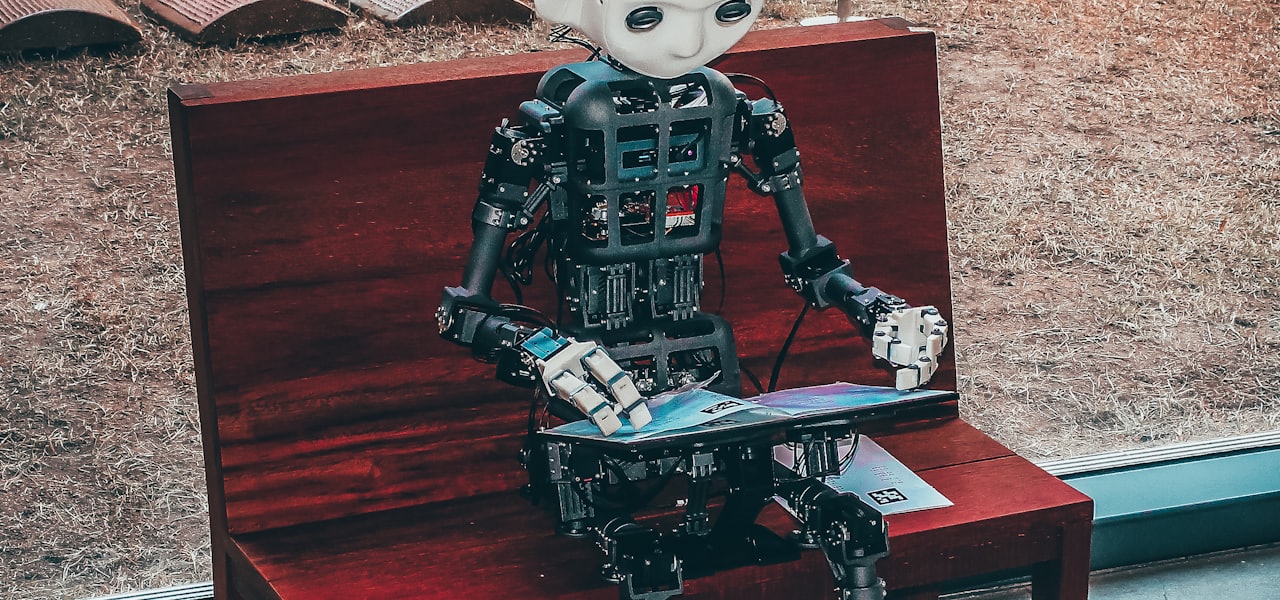
A cyborg () is a being with both organic and biomechatronic body parts. It is a portmanteau of cybernetic and organism. The term was coined in 1960 by Manfred Clynes and Nathan S. Kline. In contrast to biorobots and androids, the term cyborg applies to a living organism that has undergone restoration of function or enhancements of abilities due to the integration of some artificial component or technology that relies on feedback. == Description and definition == Alternative names for a cyborg include cybernetic organism, cyber-organism, cyber-organic being, cybernetically enhanced organism, cybernetically augmented organism, technorganic being, techno-organic being, and techno-organism. Unlike bionics, biorobotics, or androids, a cyborg is an organism that has restored function or, especially, enhanced abilities due to the integration of some artificial component or technology that relies on some sort of feedback, for example: prostheses, artificial organs, implants or, in some cases, wearable technology. Cyborg technologies may enable or support collective intelligence. A related idea is the "augmented human". While cyborgs are commonly thought of as mammals, including humans, the term can apply to any organism. === Placement and distinctions === D. S. Halacy's Cyborg: Evolution of the Superman (1965) featured an introduction which spoke of a "new frontier" that was "not merely space, but more profoundly the relationship between 'inner space' to 'outer space' – a bridge...between mind and matter." In "A Cyborg Manifesto", Donna Haraway rejects the notion of rigid boundaries between humanity and technology, arguing that, as humans depend on more technology over time, humanity and technology have become too interwoven to draw lines between them. She believes that since we have allowed and created machines and technology to be so advanced, there should be no reason to fear what we have created, and cyborgs should be embraced because they are part of human identities. However, Haraway has also expressed concern over the contradictions of scientific objectivity and the ethics of technological evolution, and has argued that "There are political consequences to scientific accounts of the world." === Biosocial definition === According to some definitions of the term, the physical attachments that humans have with even the most basic technologies have already made them cyborgs. In a typical example, a human with an artificial cardiac pacemaker or implantable cardioverter-defibrillator would be considered a cyborg, since these devices measure voltage potentials in the body, perform signal processing, and can deliver electrical stimuli, using a synthetic feedback mechanism to keep that person alive. Implants, especially cochlear implants, that combine mechanical modification with any kind of feedback response are also cybernetic enhancements. Some theorists cite such modifications as contact lenses, hearing aids, smartphones, or intraocular lenses as examples of fitting humans with technology to enhance their biological capabilities. The emerging trend of implanting microchips inside the body (mainly the hands), to make financial operations like a contactless payment, or basic tasks like opening a door, has been erroneously marketed as more recent examples of cybernetic enhancement. The latter has not yet seen significant traction outside niche areas in Scandinavia and in actual function is little more than a pre-programmed Radio-frequency identification (RFID) microchip encased in glass that does not interact with the human body (it is the same technology used in the microchips injected into animals for ease of identification), thus not fitting the definition of a cybernetic implant. As cyborgs currently are on the rise, some theorists argue there is a need to develop new definitions of aging. For instance, a bio-techno-social definition of aging has been suggested. The term is also used to address human-technology mixtures in the abstract. This includes not only commonly used pieces of technology such as phones, computers, the Internet, and so on, but also artifacts that are not usually considered technology; for example, pen and paper, and speech and language. When augmented with these technologies and connected in communication with people in other times and places, a person becomes capable of more than they were before. An example is a computer, which gains power by using Internet protocols to connect with other computers. Another example is a social-media bot—either a bot-assisted human or a human-assisted-bot—used to target social media with likes and shares. Cybernetic technologies thus include highways, pipes, electrical wiring, buildings, electrical plants, libraries, and other infrastructural constructs. Bruce Sterling, in his Shaper/Mechanist universe, suggested an idea of an alternative cyborg called 'Lobster', which is made not by using internal implants, but by using an external shell (e.g. a powered exoskeleton). The computer game Deus Ex: Invisible War prominently features cyborgs called Omar, Russian for 'lobster'. === Evolutionary perspective === In 1994, Hans Hass formulated a scientific view of the human-machine hybrids he called "hypercells". They can expand their biological cell body with artificial artifacts and thus expand their performance body. The theory of hypercells or Homo proteus, as Hass called the human-machine hybrid to distinguish Homo sapiens, extends Charles Darwin's theory of evolution and deals with the course of evolution beyond humans. In his 2019 book Novacene, James Lovelock used the term "cyborgs" to refer to the next generation of beings who will become the "understanders of the future" and "lead the cosmos to self-knowledge". While acknowledging the organic component in Clynes' and Kline's definition, he proposed that these cyborgs "will have designed and built themselves from the artificial intelligence systems we have already constructed", and used the term cyborg "to emphasize that the new intelligent beings will have arisen, like us, from Darwinian evolution." == Origins == The concept of a man-machine mixture was widespread in science fiction before World War II. As early as 1843, Edgar Allan Poe described a man with extensive prostheses in the short story "The Man That Was Used Up". In 1911, Jean de La Hire introduced the Nyctalope, a science fiction hero who was perhaps the first literary cyborg, in Le Mystère des XV (later translated as The Nyctalope on Mars). Nearly two decades later, Edmond Hamilton presented space explorers with a mixture of organic and machine parts in his 1928 novel The Comet Doom. He later featured the talking, living brain of an old scientist, Simon Wright, floating in a transparent case, and in all the adventures of his famous hero, Captain Future. In 1944, in the short story "No Woman Born", C. L. Moore wrote of Deirdre, a dancer, whose body was burned completely and whose brain was placed in a faceless but beautiful and supple mechanical body. In 1960, the term "cyborg" was coined by Manfred E. Clynes and Nathan S. Kline to refer to their conception of an enhanced human being who could survive in extraterrestrial environments: For the exogenously extended organizational complex functioning as an integrated homeostatic system unconsciously, we propose the term 'Cyborg'. Their concept was the outcome of thinking about the need for an intimate relationship between human and machine as the new frontier of space exploration was beginning to develop. A designer of physiological instrumentation and electronic data-processing systems, Clynes was the chief research scientist in the Dynamic Simulation Laboratory at Rockland State Hospital in New York. The term first appears in print 5 months earlier when The New York Times reported on the "Psychophysiological Aspects of Space Flight Symposium" where Clynes and Kline first presented their paper: A cyborg is essentially a man-machine system in which the control mechanisms of the human portion are modified externally by drugs or regulatory devices so that the being can live in an environment different from the normal one. Thereafter, Hamilton would first use the term "cyborg" explicitly in the 1962 short story, "After a Judgment Day", to describe the "mechanical analogs" called "Charlies," explaining that "[c]yborgs, they had been called from the first one in the 1960s...cybernetic organisms." The 1972 novel Cyborg by Martin Caidin introduced the character of bionic government agent Steve Austin, and was adapted into the popular television series The Six Million Dollar Man, which ran from 1973 to 1978. In 2001, a book titled Cyborg: Digital Destiny and Human Possibility in the Age of the Wearable computer was published by Doubleday. Some of the ideas in the book were incorporated into the documentary film Cyberman that same year. == Cyborg tissues in engineering == Cyborg tissues structured with carbon nanotubes and plan
AI Text-to-image Tools: Free vs Paid (2026)
Shopping for the best AI text-to-image tool? An AI text-to-image tool is software that uses machine learning to help you get more done — it keeps getting smarter as the underlying models improve. Pricing, accuracy, and the size of the model behind the tool are the three factors that most affect daily usefulness. Whether you are a beginner or a pro, the right AI text-to-image tool slots into your workflow and pays for itself fast. We tested the leading options and ranked them by quality, value, and ease of use.
Wolfgang Ketter
Wolfgang Ketter (born Traben-Trarbach, Germany, 1972) is Chaired Professor of Information Systems for a Sustainable Society at the University of Cologne. and a prominent scientist in the application of artificial intelligence, machine learning and intelligent agents in the design of smart markets, including demand response mechanisms and in particular automated auctions. He is a co-founder of the open energy system platform Power TAC, an automated retail electricity trading platform that simulates the performance of retail markets in an increasingly prosumer- and renewable-energy-influenced electricity landscape. == Career == === Advisory roles === Ketter is an advisor on the energy transition to the German government, in particular, the energy-intensive German state of North Rhine-Westphalia. He is also a fellow of the World Economic Forum and member of the WEF Global Council on Future Mobility and the Global New Mobility Coalition, contributing on the use of AI and machine learning to address issues arising from growth in electrification of energy such as the use of batteries as virtual power plants, the management of electric vehicle charging to prevent grid congestion, or the potential for peer-to-peer electricity trading. Ketter has also been an advisor for over a decade to the Port of Rotterdam on the design of energy cooperatives and energy trading platforms as well as one of the largest auction companies in the world, Royal FloraHolland, where his initial research led to a redesign of auction mechanisms and decision support systems. The cumulative research project team received the Association for Information Systems Impact Award in 2020 === Research === Ketter’s research is multidisciplinary, addressing the overlap of AI and ML in the economics of retail energy and mobility markets. The industry and policy applications of his research interconnect in large-scale projects such as the EU Smart city development project Ruggedised, for which the Erasmus University-based team's publication on the optimization of the City of Rotterdam's electric transit bus network was recognized with the Institute for Operations Research and the Management Sciences Daniel H. Wagner runner-up award. His research focuses on the use of competitive benchmarking and intelligent agents in virtual world simulations of retail energy markets as part of a smart grid. A small-scale version of the Power TAC project led to a publication on demand side management, 'A simulation of household behavior under variable prices' that has several hundred citations in publications representing a variety of scientific disciplines. Two of his publications in the Management Information Systems Quarterly journal and one in Energy Economics form the foundation for the current Power TAC platform. In 2016 and 2019 he was Chair of the Workshop on Information Technologies and Systems. Ketter is Coordinator of the Key Research Initiative Sustainable Smart Energy & Mobility at the University of Cologne, where he is a chaired Professor of Information Systems for a Sustainable Society. At the Rotterdam School of Management, Erasmus University, he is Professor of Next Generation Information Systems as well as Director of the Erasmus Centre for Future Energy Business and Academic Director of Smart Cities and Smart Energy at the Erasmus Centre of Data Analytics. He has been a visiting professor at the Haas School of Business and Berkeley Institute of Data Science, University of California at Berkeley in 2016 to 2017.
Mehryar Mohri
Mehryar Mohri is a professor and theoretical computer scientist at the Courant Institute of Mathematical Sciences. He is also heading the Machine Learning Theory (ML Theory) team at Google Research. == Career == Prior to joining the Courant Institute, Mohri was a research department head and later technology leader at AT&T Bell Labs, where he was a member of the technical staff for about ten years. Mohri has also taught as an assistant professor at the University of Paris 7 (1992-1993) and Ecole Polytechnique (1992-1994). == Research == Mohri's main area of research is machine learning, in particular learning theory. He is also an expert in automata theory and algorithms. He is the author of several core algorithms that have served as the foundation for the design of many deployed speech recognition and natural language processing systems. == Publications == Mohri is the author of the reference book Foundations of Machine Learning used as a textbook in many graduate-level machine learning courses. Mohri is also a member of the Lothaire group of mathematicians with the pseudonym M. Lothaire and contributed to the book on Applied Combinatorics on Words. He is the author of more than 250 conference and journal publications. == Organizational affiliations == Mohri is currently the President of the Association for Algorithmic Learning Theory (AALT) and the Steering Committee Chair for the ALT conference. He is also Editorial Board member of Machine Learning and TheoretiCS, Action Editor of the Journal of Machine Learning Research (JMLR) and a member of the advisory board for the Journal of Automata, Languages and Combinatorics.
Version space learning
Version space learning is a logical approach to machine learning, specifically binary classification. Version space learning algorithms search a predefined space of hypotheses, viewed as a set of logical sentences. Formally, the hypothesis space is a disjunction H 1 ∨ H 2 ∨ . . . ∨ H n {\displaystyle H_{1}\lor H_{2}\lor ...\lor H_{n}} (i.e., one or more of hypotheses 1 through n are true). A version space learning algorithm is presented with examples, which it will use to restrict its hypothesis space; for each example x, the hypotheses that are inconsistent with x are removed from the space. This iterative refining of the hypothesis space is called the candidate elimination algorithm, the hypothesis space maintained inside the algorithm, its version space. == The version space algorithm == In settings where there is a generality-ordering on hypotheses, it is possible to represent the version space by two sets of hypotheses: (1) the most specific consistent hypotheses, and (2) the most general consistent hypotheses, where "consistent" indicates agreement with observed data. The most specific hypotheses (i.e., the specific boundary SB) cover the observed positive training examples, and as little of the remaining feature space as possible. These hypotheses, if reduced any further, exclude a positive training example, and hence become inconsistent. These minimal hypotheses essentially constitute a (pessimistic) claim that the true concept is defined just by the positive data already observed: Thus, if a novel (never-before-seen) data point is observed, it should be assumed to be negative. (I.e., if data has not previously been ruled in, then it's ruled out.) The most general hypotheses (i.e., the general boundary GB) cover the observed positive training examples, but also cover as much of the remaining feature space without including any negative training examples. These, if enlarged any further, include a negative training example, and hence become inconsistent. These maximal hypotheses essentially constitute a (optimistic) claim that the true concept is defined just by the negative data already observed: Thus, if a novel (never-before-seen) data point is observed, it should be assumed to be positive. (I.e., if data has not previously been ruled out, then it's ruled in.) Thus, during learning, the version space (which itself is a set – possibly infinite – containing all consistent hypotheses) can be represented by just its lower and upper bounds (maximally general and maximally specific hypothesis sets), and learning operations can be performed just on these representative sets. After learning, classification can be performed on unseen examples by testing the hypothesis learned by the algorithm. If the example is consistent with multiple hypotheses, a majority vote rule can be applied. == Historical background == The notion of version spaces was introduced by Mitchell in the early 1980s as a framework for understanding the basic problem of supervised learning within the context of solution search. Although the basic "candidate elimination" search method that accompanies the version space framework is not a popular learning algorithm, there are some practical implementations that have been developed (e.g., Sverdlik & Reynolds 1992, Hong & Tsang 1997, Dubois & Quafafou 2002). A major drawback of version space learning is its inability to deal with noise: any pair of inconsistent examples can cause the version space to collapse, i.e., become empty, so that classification becomes impossible. One solution of this problem is proposed by Dubois and Quafafou that proposed the Rough Version Space, where rough sets based approximations are used to learn certain and possible hypothesis in the presence of inconsistent data.
How to Choose an AI Background Remover
Shopping for the best AI background remover? An AI background remover is software that uses machine learning to help you get more done — it keeps getting smarter as the underlying models improve. Pricing, accuracy, and the size of the model behind the tool are the three factors that most affect daily usefulness. Whether you are a beginner or a pro, the right AI background remover slots into your workflow and pays for itself fast. Below we compare features, pricing, and real output so you can choose with confidence.