AI For Engineering Students

AI For Engineering Students — independent reviews, comparisons, pricing and step-by-step guides on Aizhi.

  • TIMIT

    TIMIT

    TIMIT is a corpus of phonemically and lexically transcribed speech of American English speakers of different sexes and dialects. Each transcribed element has been delineated in time. TIMIT was designed to further acoustic-phonetic knowledge and automatic speech recognition systems. It was commissioned by DARPA and corpus design was a joint effort between the Massachusetts Institute of Technology, SRI International, and Texas Instruments (TI). The speech was recorded at TI, transcribed at MIT, and verified and prepared for publishing by the National Institute of Standards and Technology (NIST). There is also a telephone bandwidth version called NTIMIT (Network TIMIT). TIMIT and NTIMIT are not freely available — either membership of the Linguistic Data Consortium, or a monetary payment, is required for access to the dataset. == Data == TIMIT contains ~5 hours of speech, of 10 sentences spoken by each of 630 speakers. The sentences were randomly sampled from a corpus of 2342 sentences. The speakers were native speakers of American English, classified under 8 major dialect regions: New England, Northern, North Midland, South Midland, Southern, New York City, Western, Army Brat (moved around). The speakers were 70% male and 30% female. Recordings were made in a noise-isolated recording booth at Texas Instrument, using a semi-automatic computer system (STEROIDS) to control the presentation of prompts to the speaker and the recording. Two-channel recordings were made using a Sennheiser HMD 414 headset-mounted microphone and a Brüel & Kjær 1/2" far-field pressure microphone (#4165). The speech was digitized at a sample rate of 20 kHz then and downsampled to 16 kHz. == History == The TIMIT telephone corpus was an early attempt to create a database with speech samples. It was published in the year 1988 on CD-ROM and consists of only 10 sentences per speaker. Two 'dialect' sentences were read by each speaker, as well as another 8 sentences selected from a larger set Each sentence averages 3 seconds long and is spoken by 630 different speakers. It was the first notable attempt in creating and distributing a speech corpus and the overall project has produced costs of 1.5 million US$. An update was released in October 1990. It included full 630-speaker corpus; checked and corrected transcriptions; word-alignment transcriptions; NIST SPHERE-headered waveform files and header manipulation software; phonemic dictionary; new test and training subsets balanced for dialectal and phonetic coverage; more extensive documentation. The full name of the project is DARPA-TIMIT Acoustic-Phonetic Continuous Speech Corpus and the acronym TIMIT stands for Texas Instruments/Massachusetts Institute of Technology. The main reason why a corpus of telephone speech was created was to train speech recognition software. In the Blizzard challenge, different software has the obligation to convert audio recordings into textual data and the TIMIT corpus was used as a standardized baseline.

    Read more →
  • T-norm fuzzy logics

    T-norm fuzzy logics

    T-norm fuzzy logics are a family of non-classical logics, informally delimited by having a semantics that takes the real unit interval [0, 1] for the system of truth values and functions called t-norms for permissible interpretations of conjunction. They are mainly used in applied fuzzy logic and fuzzy set theory as a theoretical basis for approximate reasoning. T-norm fuzzy logics belong in broader classes of fuzzy logics and many-valued logics. In order to generate a well-behaved implication, the t-norms are usually required to be left-continuous; logics of left-continuous t-norms further belong in the class of substructural logics, among which they are marked with the validity of the law of prelinearity, (A → B) ∨ (B → A). Both propositional and first-order (or higher-order) t-norm fuzzy logics, as well as their expansions by modal and other operators, are studied. Logics that restrict the t-norm semantics to a subset of the real unit interval (for example, finitely valued Łukasiewicz logics) are usually included in the class as well. Important examples of t-norm fuzzy logics are monoidal t-norm logic (MTL) of all left-continuous t-norms, basic logic (BL) of all continuous t-norms, product fuzzy logic of the product t-norm, or the nilpotent minimum logic of the nilpotent minimum t-norm. Some independently motivated logics belong among t-norm fuzzy logics, too, for example Łukasiewicz logic (which is the logic of the Łukasiewicz t-norm) or Gödel–Dummett logic (which is the logic of the minimum t-norm). == Motivation == As members of the family of fuzzy logics, t-norm fuzzy logics primarily aim at generalizing classical two-valued logic by admitting intermediary truth values between 1 (truth) and 0 (falsity) representing degrees of truth of propositions. The degrees are assumed to be real numbers from the unit interval [0, 1]. In propositional t-norm fuzzy logics, propositional connectives are stipulated to be truth-functional, that is, the truth value of a complex proposition formed by a propositional connective from some constituent propositions is a function (called the truth function of the connective) of the truth values of the constituent propositions. The truth functions operate on the set of truth degrees (in the standard semantics, on the [0, 1] interval); thus the truth function of an n-ary propositional connective c is a function Fc: [0, 1]n → [0, 1]. Truth functions generalize truth tables of propositional connectives known from classical logic to operate on the larger system of truth values. T-norm fuzzy logics impose certain natural constraints on the truth function of conjunction. The truth function ∗ : [ 0 , 1 ] 2 → [ 0 , 1 ] {\displaystyle \colon [0,1]^{2}\to [0,1]} of conjunction is assumed to satisfy the following conditions: Commutativity, that is, x ∗ y = y ∗ x {\displaystyle xy=yx} for all x and y in [0, 1]. This expresses the assumption that the order of fuzzy propositions is immaterial in conjunction, even if intermediary truth degrees are admitted. Associativity, that is, ( x ∗ y ) ∗ z = x ∗ ( y ∗ z ) {\displaystyle (xy)z=x(yz)} for all x, y, and z in [0, 1]. This expresses the assumption that the order of performing conjunction is immaterial, even if intermediary truth degrees are admitted. Monotony, that is, if x ≤ y {\displaystyle x\leq y} then x ∗ z ≤ y ∗ z {\displaystyle xz\leq yz} for all x, y, and z in [0, 1]. This expresses the assumption that increasing the truth degree of a conjunct should not decrease the truth degree of the conjunction. Neutrality of 1, that is, 1 ∗ x = x {\displaystyle 1x=x} for all x in [0, 1]. This assumption corresponds to regarding the truth degree 1 as full truth, conjunction with which does not decrease the truth value of the other conjunct. Together with the previous conditions this condition ensures that also 0 ∗ x = 0 {\displaystyle 0x=0} for all x in [0, 1], which corresponds to regarding the truth degree 0 as full falsity, conjunction with which is always fully false. Continuity of the function ∗ {\displaystyle } (the previous conditions reduce this requirement to the continuity in either argument). Informally this expresses the assumption that microscopic changes of the truth degrees of conjuncts should not result in a macroscopic change of the truth degree of their conjunction. This condition, among other things, ensures a good behavior of (residual) implication derived from conjunction; to ensure the good behavior, however, left-continuity (in either argument) of the function ∗ {\displaystyle } is sufficient. In general t-norm fuzzy logics, therefore, only left-continuity of ∗ {\displaystyle } is required, which expresses the assumption that a microscopic decrease of the truth degree of a conjunct should not macroscopically decrease the truth degree of conjunction. These assumptions make the truth function of conjunction a left-continuous t-norm, which explains the name of the family of fuzzy logics (t-norm based). Particular logics of the family can make further assumptions about the behavior of conjunction (for example, Gödel–Dummett logic requires its idempotence) or other connectives (for example, the logic IMTL (involutive monoidal t-norm logic) requires the involutiveness of negation). All left-continuous t-norms ∗ {\displaystyle } have a unique residuum, that is, a binary function ⇒ {\displaystyle \Rightarrow } such that for all x, y, and z in [0, 1], x ∗ y ≤ z {\displaystyle xy\leq z} if and only if x ≤ y ⇒ z . {\displaystyle x\leq y\Rightarrow z.} The residuum of a left-continuous t-norm can explicitly be defined as ( x ⇒ y ) = sup { z ∣ z ∗ x ≤ y } . {\displaystyle (x\Rightarrow y)=\sup\{z\mid zx\leq y\}.} This ensures that the residuum is the pointwise largest function such that for all x and y, x ∗ ( x ⇒ y ) ≤ y . {\displaystyle x(x\Rightarrow y)\leq y.} The latter can be interpreted as a fuzzy version of the modus ponens rule of inference. The residuum of a left-continuous t-norm thus can be characterized as the weakest function that makes the fuzzy modus ponens valid, which makes it a suitable truth function for implication in fuzzy logic. Left-continuity of the t-norm is the necessary and sufficient condition for this relationship between a t-norm conjunction and its residual implication to hold. Truth functions of further propositional connectives can be defined by means of the t-norm and its residuum, for instance the residual negation ¬ x = ( x ⇒ 0 ) {\displaystyle \neg x=(x\Rightarrow 0)} or bi-residual equivalence x ⇔ y = ( x ⇒ y ) ∗ ( y ⇒ x ) . {\displaystyle x\Leftrightarrow y=(x\Rightarrow y)(y\Rightarrow x).} Truth functions of propositional connectives may also be introduced by additional definitions: the most usual ones are the minimum (which plays a role of another conjunctive connective), the maximum (which plays a role of a disjunctive connective), or the Baaz Delta operator, defined in [0, 1] as Δ x = 1 {\displaystyle \Delta x=1} if x = 1 {\displaystyle x=1} and Δ x = 0 {\displaystyle \Delta x=0} otherwise. In this way, a left-continuous t-norm, its residuum, and the truth functions of additional propositional connectives determine the truth values of complex propositional formulae in [0, 1]. Formulae that always evaluate to 1 are called tautologies with respect to the given left-continuous t-norm ∗ , {\displaystyle ,} or ∗ - {\displaystyle {\mbox{-}}} tautologies. The set of all ∗ - {\displaystyle {\mbox{-}}} tautologies is called the logic of the t-norm ∗ , {\displaystyle ,} as these formulae represent the laws of fuzzy logic (determined by the t-norm) that hold (to degree 1) regardless of the truth degrees of atomic formulae. Some formulae are tautologies with respect to a larger class of left-continuous t-norms; the set of such formulae is called the logic of the class. Important t-norm logics are the logics of particular t-norms or classes of t-norms, for example: Łukasiewicz logic is the logic of the Łukasiewicz t-norm x ∗ y = max ( x + y − 1 , 0 ) {\displaystyle xy=\max(x+y-1,0)} Gödel–Dummett logic is the logic of the minimum t-norm x ∗ y = min ( x , y ) {\displaystyle xy=\min(x,y)} Product fuzzy logic is the logic of the product t-norm x ∗ y = x ⋅ y {\displaystyle xy=x\cdot y} Monoidal t-norm logic MTL is the logic of (the class of) all left-continuous t-norms Basic fuzzy logic BL is the logic of (the class of) all continuous t-norms It turns out that many logics of particular t-norms and classes of t-norms are axiomatizable. The completeness theorem of the axiomatic system with respect to the corresponding t-norm semantics on [0, 1] is then called the standard completeness of the logic. Besides the standard real-valued semantics on [0, 1], the logics are sound and complete with respect to general algebraic semantics, formed by suitable classes of prelinear commutative bounded integral residuated lattices. == History == Some particular t-norm fuzzy logics have been introduced and investigated long before the family was re

    Read more →
  • Minne Atairu

    Minne Atairu

    Minne Atairu is a Nigerian interdisciplinary artist, a recipient of the 2021 Global South Award Lumen Prize for Art and Technology. She generates synthetic Benin Bronzes through recombination of historical fragments, sculptures, texts, images, and sounds. == Early life and education == Atairu was born in Benin, Nigeria. She holds a bachelor's degree in art history from the University of Maiduguri in Maiduguri, Nigeria; a master's degree in museum studies from the George Washington University in Washington, D.C.; and a doctorate in art education from Teachers College, Columbia University in New York City. Her academic research integrates artificial intelligence, art/museum education and hip-hop based education. == Works == Atairu's artmaking involves using artificial intelligence (AI; such as StyleGAN, GPT-3) to make artwork. She uses tools such as Midjourney and Blender software to develop her works. === Mami Wata === Her first work is a Yoruba goddess called Mami Wata where she used Midjourney in generating the images. === To the Hand === For her 2023 installation To the Hand at The Shed arts center, she worked with Blender to convert text into 3D-printed sculptures made of corn starch or sugarcane infused with bronze. The rings of ground terra-cotta that surround the sculpture represent the walls and deep moats of Benin. == Publications == Atairu, Minne (February 1, 2024). "Reimagining Benin Bronzes using generative adversarial networks". AI & Society. 39 (1): 91–102. doi:10.1007/s00146-023-01761-7. ISSN 1435-5655.

    Read more →
  • The Fractal Prince

    The Fractal Prince

    The Fractal Prince is the second science fiction novel by Hannu Rajaniemi and the second novel to feature the post-human gentleman thief Jean le Flambeur. It was published in Britain by Gollancz in September 2012, and by Tor in the same year in the US. The novel is the second in the trilogy, following The Quantum Thief (2010) and preceding The Causal Angel (2014). == Plot summary == After the events of The Quantum Thief, Jean le Flambeur and Mieli are on their way to Earth. Jean is trying to open the Schrödinger's Box he retrieved from the memory palace on the Oubliette. After making little progress, he is prodded by the ship Perhonen to talk to Mieli, who turns out to be possessed by the pellegrini again. This time, Jean identifies Mieli's employer as a Sobornost Founder, Joséphine Pellegrini, and gets her to reveal how he got captured, thereby picking up the clues to make plans for his next heist. No sooner is that done than an attack comes from the Hunter. The ship and crew barely survived that, and Jean realizes that he has to find a better way to open the Box - fast. Mieli has been very quiet after they left Mars. She has given up almost everything to the pellegrini, even her identity, as she has promised to let the pellegrini make gogols of her in exchange for rescuing the thief. Yet, having to work with the thief is testing her, especially when the thief eventually does something even more unforgivable than stealing Sydän's jewel from her. In the city of Sirr, on an Earth ravaged by wildcode, Tawaddud and Dunyazad are sisters and members of the powerful Gomelez family. Tawaddud is the black sheep of the family, having run away from her husband and consorted with a notorious jinn, a disembodied intelligence from the wildcode desert. Now Cassar Gomelez, her father, hopes to get her to curry favor with a gogol merchant, Abu Nuwas, so that he has enough votes in the Council for the upcoming decision to renegotiate the Cry of Wrath Accords with the Sobornost. Soon, Tawaddud is embroiled in an investigation with a Sobornost envoy into the murder that triggered the need for her father to forge a new alliance in the first place, and forced to confront old secrets that will change Sirr forever. Somewhere else, in a bookshop and on a beach, a young boy is at play. His mother has told him not to talk to strangers, but there has never been anyone here before. Until now. Should he talk to them? == Influences == In the acknowledgments, Rajaniemi cites the influence of "Andy Clark, Douglas Hofstadter, Maurice Leblanc, Jan Potocki and [...] The Arabian Nights." === Self-loops === In the novel, the idea that the mind is a self-loop may have been influenced by the theories of the Professor of Philosophy, Andy Clark, and the book I Am a Strange Loop by Douglas Hofstadter. === Frame stories === The novel uses frame stories rather extensively, a feature also of The Arabian Nights and Jan Potocki's The Manuscript Found in Saragossa. Several characters in Sirr are the namesakes of characters in these two earlier works as well. The events in The Quantum Thief are also retold at least once by Jean le Flambeur in the course of the events in this novel. == Reception == The novel has received generally positive reviews. However, criticisms of the novel still revolve around Rajaniemi's uncompromising "show, don't tell" style. For example, Amy Goldschlager, writing for the Los Angeles Review of Books, suggested that "[a] bit more explication of the physics involved (“surfing the deficit angle”?) would really be helpful, more helpful than the description of the Schrödinger’s Cat problem given earlier in the book".

    Read more →
  • Decision list

    Decision list

    Decision lists are a representation for Boolean functions which can be easily learned from examples. Single term decision lists are more expressive than disjunctions and conjunctions; however, 1-term decision lists are less expressive than the general disjunctive normal form and the conjunctive normal form. The language specified by a k-length decision list includes as a subset the language specified by a k-depth decision tree. Learning decision lists can be used for attribute efficient learning, a type of machine learning. == Definition == A decision list (DL) of length r is of the form: if f1 then output b1 else if f2 then output b2 ... else if fr then output br where fi is the ith formula and bi is the ith boolean for i ∈ { 1... r } {\displaystyle i\in \{1...r\}} . The last if-then-else is the default case, which means formula fr is always equal to true. A k-DL is a decision list where all of formulas have at most k terms. Sometimes "decision list" is used to refer to a 1-DL, where all of the formulas are either a variable or its negation.

    Read more →
  • A Fire Upon the Deep

    A Fire Upon the Deep

    A Fire Upon the Deep is a 1992 science fiction novel by American writer Vernor Vinge. It is a space opera involving superhuman intelligences, aliens, variable physics, space battles, love, betrayal, genocide, and a communication medium resembling Usenet. A Fire Upon the Deep won the Hugo Award in 1993, sharing it with Doomsday Book by Connie Willis. Besides the normal print book editions, the novel was also included on a CD-ROM sold by ClariNet Communications along with the other nominees for the 1993 Hugo awards. The CD-ROM edition included numerous annotations by Vinge on his thoughts and intentions about different parts of the book, and was later released as a standalone e-book. It has a loose prequel, A Deepness in the Sky, from 1999, and a direct sequel, The Children of the Sky, from 2012. == Setting == The novel is set in various locations within the Milky Way. The galaxy is divided into four concentric volumes called the "Zones of Thought"; it is not clear to the novel's characters whether this is a natural phenomenon or an artificially created one. Each Zone has fundamental differences in basic physical laws. One of the main consequences of these differences is the effect on intelligence. Artificial intelligence and automation is most directly affected, in that advanced hardware and software from the Beyond or the Transcend will work less and less well as a ship descends towards the Unthinking Depths. Biological intelligence is affected to a lesser degree. The four zones are spoken of in terms of "low" to "high" as follows: The Unthinking Depths are the innermost zone, surrounding the Galactic Center. In it, only minimal forms of intelligence, biological or otherwise, are possible. This means that any ship straying into the Depths will be stranded, effectively permanently. Even if the crew did not die immediately—and some forms of life native to "higher" Zones would likely do so—they would be rendered incapable of even human intelligence, leaving them unable to operate their ship in any meaningful way. Surrounding the Depths is the Slow Zone or Slowness. "Old Earth" is in this Zone, although Earth plays no significant role in the story. Biological intelligence is possible in "the Slowness", but not true, sentient, artificial intelligence. Faster than light travel (FTL) is impossible in the Slow Zone. Faster-than-light communication is impossible into or out of the Slow Zone. As the boundaries of the Zones are subject to change, accidental entry into the Slow Zone is a major hazard at the "Bottom" of the Beyond. Starships which operate near the Beyond/Slow Zone border often have an auxiliary Bussard ramjet drive, so that if they accidentally stray into the Slow Zone, they will at least have a backup (sub-light) drive to try to reach the Beyond. Such ships also tend to include "coldsleep" equipment, as it is likely that any such return will still take many lifetimes for most species. The next layer outward is the Beyond, within which artificial intelligence, FTL travel, and FTL communication are possible. All human civilizations in the Beyond are descended from a single ethnic Norwegian group. The original settlement of this group is known as Nyjora; other human settlements in the Beyond include Straumli Realm and Sjandra Kei. In the Beyond, FTL travel is accomplished by making many small "jumps" across space, with the efficiency of the drive increasing the farther a ship travels from the galactic core. The Beyond is not a homogeneous zone; it includes the "High Beyond", "Middle Beyond", and the "Bottom of the Beyond", depending on distance from the galactic core. The Beyond is populated by a very large number of interstellar and intergalactic civilizations which are linked by an FTL communication network, "the Net", sometimes cynically called the "Net of a Million Lies". The Net is depicted as working much like the Usenet network in the early 1990s, with transcripts of messages containing header and footer information as one would find in such forums. The outermost layer, containing the galactic halo, is the Transcend, within which incomprehensible, superintelligent beings dwell. When a "Beyonder" civilization reaches the point of technological singularity, it can "Transcend", becoming a "Power". Such Powers always seem to relocate to the Transcend, seemingly necessarily, where they become engaged in activities which are entirely mysterious to those in the Beyond. == Plot == An expedition from Straumli Realm, a human civilization in the High Beyond, investigates a newly discovered data archive in the Low Transcend. The expedition's facility, High Lab, is gradually compromised by a superintelligence that is accidentally awoken by the researchers. This superintelligence is later known as the Blight. Shortly before the Blight's final "flowering", two self-aware entities, created similarly to the Blight, plot to aid the humans before the Blight can gain its full powers. Finally recognizing their danger, the High Lab researchers attempt to flee in two ships. The Blight destroys one ship; a second ship, carrying many High Lab children in coldsleep boxes, escapes. This ship lands on a distant planet at the Bottom of the Beyond. The planet is occupied by dog-like creatures, dubbed "Tines", who live in packs as group minds. The Tines have a level of technology comparable to the human Middle Ages. Upon landing, however, the two surviving adults, Arne and Sjana Olnsdot, are ambushed and killed by Tine fanatics known as Flenserists, in whose realm they have landed. The Flenserists capture their children, Jefri and Johanna. Johanna is rescued by a Tine named Peregrine and taken to a neighboring kingdom ruled by Woodcarver. A distress signal from the Straumli ship eventually reaches Relay, a major information provider for the Net. A Transcendent being named "Old One" contacts Relay, seeking information about the Blight and the humans who released it. Old One then reconstitutes a human man named Pham Nuwen from the wreckage of a spaceship to act as its agent. Pham remains unsure if he is a construct or if his memories are real. Ravna Bergsndot, the only human Relay employee, traces the Straumli ship's signal to the Tines' world and persuades her employer to investigate. Ravna contracts the merchant vessel Out of Band II to transport her and Pham. The ship is owned by two Skroderiders, Blueshell and Greenstalk. Before the mission is launched, the Blight launches a surprise attack on Relay and kills Old One. As Old One dies, it downloads its anti-Blight information into Pham. Pham, Ravna and the Skroderiders barely escape Relay's destruction in the Out of Band II. During their journey to Tine's World, Ravna communicates with Jefri. Jefri is manipulated to believe that Woodcarver is his enemy. The Flenserist leaders, Steel and Tyrathect, use Ravna's information to develop advanced technology such as cannon and radio communication. Meanwhile, Johanna and the knowledge stored in her dataset device help Woodcarver rapidly develop as well. The Blight expands, taking over several civilizations, brainwashing their populations, and seizing archives in the Beyond. On the Net, some claim that humans are the means by which the Blight is able to spread. Anti-human fanatics destroy the entire civilization of Sjandra Kei, which is Ravna's home world. The Out of Band II is pursued by three fleets: anti-human fanatics, survivors from Sjandra Kei, and a shadow fleet controlled by the Blight. During the pursuit, Ravna and Pham learn that every member of the Skroderider species can be subverted by the Blight; this drives a wedge between the crew members. Ships from Sjandra Kei sacrifice themselves to delay the Blight and the anti-human ships, allowing the Out of Band II to reach Tine's World before the Blight. When the Out of Band II arrives at Tine's World, the humans ally with Woodcarver to defeat the Flenserists and rescue Jefri. Blueshell sacrifices himself to rescue Jefri. Pham then initiates an anti-Blight Countermeasure, which was aboard the humans' ship. The Countermeasure extends the Slow Zone outward by thousands of light years. This envelops and destroys the Blight, but results in the destruction of thousands of civilizations and trillions of deaths. The humans are stranded on the Tines' World, now in the depths of the Slow Zone. Activating the Countermeasure proves fatal to Pham, but before he dies, the remnant of Old One reveals to him that, although his body is a reconstruction, his memories are indeed real. == Related works == Vinge first used the concepts of "Zones of Thought" in a 1988 novella The Blabber, which occurs after Fire. Vinge's novel A Deepness in the Sky (1999) is a prequel to A Fire Upon the Deep set 20,000 years earlier and featuring Pham Nuwen. Vinge's The Children of the Sky, "a near-term sequel to A Fire Upon the Deep", set ten years later, was released in October 2011. Vinge's former wife, Joan D. Vinge, has also written s

    Read more →
  • The Last Question

    The Last Question

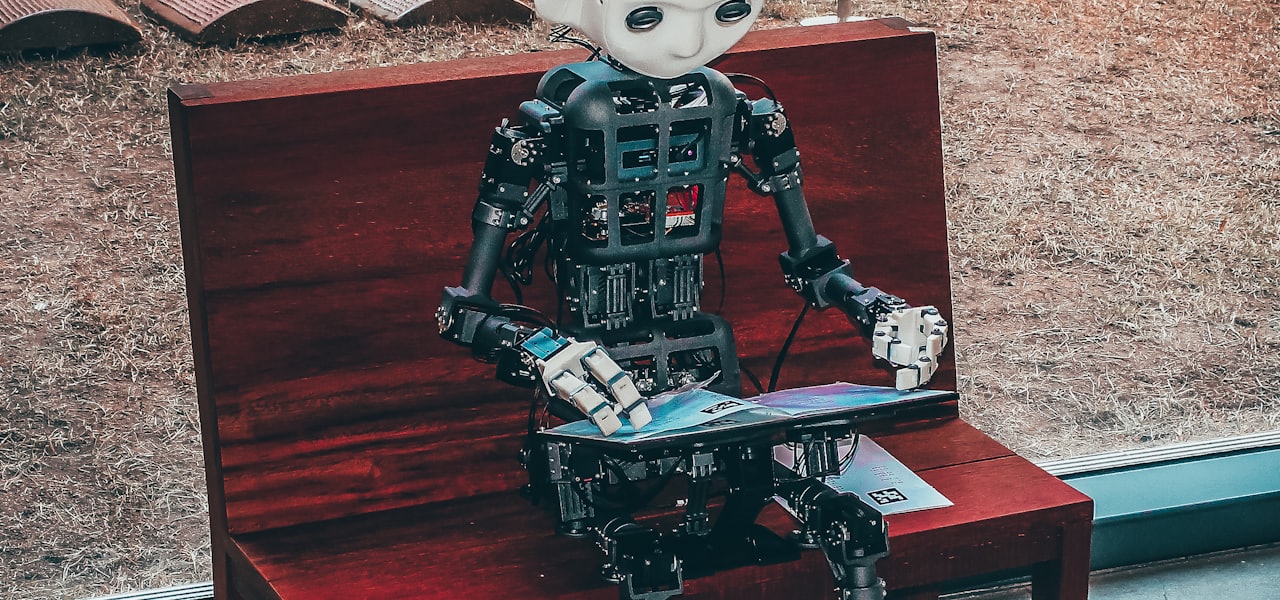
    "The Last Question" is a science fiction short story by American writer Isaac Asimov. It first appeared in the November 1956 issue of Science Fiction Quarterly; and in the anthologies in the collections Nine Tomorrows (1959), The Best of Isaac Asimov (1973), Robot Dreams (1986), The Best Science Fiction of Isaac Asimov (1986), the retrospective Opus 100 (1969), and Isaac Asimov: The Complete Stories, Vol. 1 (1990). While he also considered it one of his best works, "The Last Question" was Asimov's favorite short story of his own authorship, and is one of a loosely connected series of stories concerning a fictional computer called Multivac. Through successive generations, humanity questions Multivac on the subject of entropy. The story blends science fiction, theology, and philosophy. It has been recognized as a counterpoint to Fredric Brown's short short story "Answer", published two years earlier. == History == In conceiving Multivac, Asimov was extrapolating the trend towards centralization that characterized computation technology planning in the 1950s to an ultimate centrally managed global computer. After seeing a planetarium adaptation of his work, Asimov "privately" concluded that the story was his best science fiction yet written. He placed it just higher than "The Ugly Little Boy" (September 1958) and "The Bicentennial Man" (1976). The story asks the question of humanity's fate, and human existence as a whole, highlighting Asimov's focus on important aspects of our future like population growth and environmental issues. "The Last Question" ranks with "Nightfall" (1941) as one of Asimov's best-known and most acclaimed short stories. He wrote in 1973 that he appreciated how easy the story was to write after he had the idea. He was so often approached by fans who remembered the story but not the title, that in one instance he gave the answer, correctly, before the fan had even described the story. == Plot summary == By the year 2061, Multivac, a self-adjusting and self-correcting computer, has allowed mankind to reach beyond the planetary confines of Earth and harness solar energy. Two technicians, Adell and Lupov, celebrate Multivac's role in this development. Over drinks, they discuss that the sun will expire due to the second law of thermodynamics, which states that entropy inevitably increases. When Adell asks Multivac whether this can be reversed, the computer responds that it has insufficient data to answer. In several episodes over ten trillion years, increasingly advanced humans pose the same question to the computers of their time. Each time the computer gives the same response. At the heat death of the universe, the last disembodied consciousness of Man asks the question a final time of a computer that resides in hyperspace before merging with it. After collecting the last data from the dead universe, the computer continues to process it alone and finds an answer to the last question. Having no one to tell it to, it proceeds to demonstrate by saying "LET THERE BE LIGHT!" == Themes == === Philosophy === Although science and religion are frequently presented as having an oppositional relationship, "The Last Question" explores some biblical contexts ("Let there be light"). In Asimov's story, aspects like the great meaning of existence are culminated through both technology and human knowledge. The evolution from Multivac to AC also emulates a sort of cycle of existence. === Dystopian happy ending === Multivac's purpose was conceptualized with a desire for knowledge, promoting the idea that more knowledge will lead to a better and more fruitful future for humanity. However, the computer's answers regarding the future suggest an inevitable exhaustion of the Sun, and this thirst for knowledge becomes an obsession with the future. The story's end displays a dichotomy between annihilation and peace. == Dramatic adaptations == === Planetarium shows === "The Last Question" was first adapted for the Abrams Planetarium at Michigan State University (in 1966), featuring the voice of Leonard Nimoy, as Asimov wrote in his autobiography In Joy Still Felt (1980). It was adapted for the Strasenburgh Planetarium in Rochester, New York (in 1969), under the direction of Ian C. McLennan. It was adapted for the Edmonton Space Sciences Centre in Edmonton, Alberta (early 1970s), under the direction of John Hault. It was adapted for the Gates Planetarium at the Denver Museum of Natural History in 1973 under the direction of Mark B. Peterson It subsequently played at the: Fels Planetarium of the Franklin Institute in Philadelphia in 1973 Planetarium of the Reading School District in Reading, Pennsylvania in 1974 Buhl Planetarium, Pittsburgh in 1974 The Space Transit Planetarium of the Museum of Science in Miami during 1977 Vanderbilt Planetarium in Centerport New York, in 1978, read by singer-songwriter and Long Island resident Harry Chapin. Hansen Planetarium in Salt Lake City, Utah (in 1980 and 1989) A reading of the story was played on BBC Radio 7 in 2008 and 2009. Gates Planetarium in Denver, Colorado (in early 2020) In 1989 Asimov updated the star show adaptation to add in quasars and black holes. The story was adapted as a comic book by Don Thompson and drawn by John Estes in the third issue of ORBiT.

    Read more →
  • Sunspring

    Sunspring

    Sunspring is a 2016 experimental science fiction short film entirely written by an artificial intelligence bot using neural networks. It was conceived by BAFTA-nominated filmmaker Oscar Sharp and NYU AI researcher Ross Goodwin and produced by film production company, End Cue along with Allison Friedman and Andrew Swett. It stars Thomas Middleditch, Elisabeth Grey, and Humphrey Ker as three people, namely H, H2, and C, living in a future world and eventually connecting with each other through a love triangle. The script of the film was authored by a recurrent neural network called long short-term memory (LSTM) by an AI bot named Benjamin. Originally made for the Sci-Fi-London film festival's 48hr Challenge, it was released online by technology news website Ars Technica on 9 June 2016. == Premise == Sunspring narrates the story of three people - H (Middleditch), H2 (Grey), and C (Ker) - set in a futuristic world and entangled with murder and love. == Cast == Thomas Middleditch as H Elisabeth Grey as H2 Humphrey Ker as C == Production == Oscar Sharp originally created the film for the 48hr Film Challenge contest of Sci-Fi-London, a film festival which focuses on science fiction. For the challenge, contestants are given a set of prompts (mostly props and lines) that have to appear in a movie they make over the next two days. It eventually contested in the festival and was nominated among the final top ten films Sharp collaborated with his longtime associate Ross Goodwin, an AI researcher in New York University to create the AI bot, which was initially called Jetson. The bot, which later came to call itself Benjamin, wrote the screenplay including stage directions and dialog. The garbled script was then interpreted by Sharp who directed the actors to construe the plot points themselves and enact the play. According to Ars Technica, the final plot turned out to be a tale of romance and murder, set in a dark future world. === Benjamin, the automatic screenwriter === Called the world's first automatic screenwriter, Benjamin is a self-improving LSTM RNN machine intelligence trained on human screenplays conceived by Goodwin and Sharp. It was trained to write the screenplay by feeding it with a corpus of dozens of sci-fi screenplays found online—mostly movies from the 1980s and 90s. == Music == The film contains a song from Brooklyn-based electro-acoustic duo Tiger and Man, with lyrics written by Benjamin using a database of 30,000 folk songs. As well as a score written by composer Andrew Orkin. == Reception == CNet called it "a beautiful, bizarre sci-fi novelty." Critic Amanda Kooser said, "...probably won't start a rush for replacing human screenwriters with machines. Some day, neural networks may get better at imitating the art of coherent storytelling, but we're not there yet. That doesn't mean "Sunspring" isn't entertaining or worthy of viewing. It is. It's a thought experiment come to life, a novelty." As of April 2019, it has surpassed 1 million views on YouTube.

    Read more →
  • Sketchpad

    Sketchpad

    Sketchpad (a.k.a. Robot Draftsman) is a computer program written by Ivan Sutherland in 1963 in the course of his PhD thesis, for which he received the Turing Award in 1988, and the Kyoto Prize in 2012. It pioneered human–computer interaction (HCI), and is considered the ancestor of modern computer-aided design (CAD) programs and as a major breakthrough in the development of computer graphics in general. For example, Sketchpad inspired the graphical user interface (GUI) and object-oriented programming. Using the program, Sutherland showed that computer graphics could be used for both artistic and technical purposes and for demonstrating a novel method of human–computer interaction. == History == See History of the graphical user interface for a more detailed discussion of GUI development. == Software == Sketchpad was the earliest program ever to use a complete graphical user interface. The clever way the program organizes its geometric data pioneered the use of master (objects) and occurrences (instances) in computing and pointed forward to object-oriented programming. The main idea was to have master drawings which can be instantiated into many duplicates. When a master drawing is changed, then all instances change also. This was the first known form of an entity component system: for example instead of encapsulating points inside of a line object, the points are stored in a ring buffer as described in pages 48 to 52 of the paper, and the line only points to them. This allowed moving one point to alter all the shapes that use it in a single operation. The structures in Sketchpad were also able to store pointers to functions, to achieve a different behavior depending on the kind of object. In figure 3.8 of the paper, the "instances generic block" stores several "subroutine entries" which are pointers to functions: "display", "howbig" etc. This was an early form of virtual functions. Geometric constraints was another major invention in Sketchpad, letting a user easily constrain geometric properties in the drawing: for instance, the length of a line or the angle between two lines could be fixed. As a trade magazine said, clearly Sutherland "broke new ground in 3D computer modeling and visual simulation, the basis for computer graphics and CAD/CAM". Very few programs can be called precedents for his achievements. Patrick J. Hanratty is sometimes called the "father of CAD/CAM" and wrote PRONTO, a numerical control language at General Electric in 1957, and wrote CAD software while working for General Motors beginning in 1961. Sutherland wrote in his thesis that Bolt, Beranek and Newman had a "similar program" and T-Square was developed by Peter Samson and one or more fellow MIT students in 1962, both for the PDP-1. The Computer History Museum holds program listings for Sketchpad. == Hardware == Sketchpad ran on the MIT Lincoln Laboratory TX-2 (1958) computer at the Massachusetts Institute of Technology (MIT), which had 64k of 36-bit words. The user drew on the computer monitor screen with the recently invented light pen, which relayed information on its position by computing at what time the light from the scanning cathode-ray tube screen is detected. To configure the initial position of the light pen, the word INK was displayed on the screen, which, upon tapping, initialised the program with a white cross to continue keeping track of the pen's movement relative to its prior position. Of the 36 bits available to store each display spot in the display file, 20 gave the coordinates of that spot for the display system and the remaining 16 gave the address of the n-component element responsible for adding that spot to display. The TX-2 was an experimental machine and the hardware changed often (on Wednesdays, according to Sutherland). By 1975, the light pen and the cathode-ray tube with which it had been used had been removed. == Publications == The Sketchpad program was part and parcel of Sutherland's Ph.D. thesis at MIT and peripherally related to the Computer-Aided Design project at that time. Sketchpad: A Man-Machine Graphical Communication System.

    Read more →
  • Privacy Lost

    Privacy Lost

    Privacy Lost is a 2023 short science fiction film directed by Peter Stoel and Robert Berger. It follows a family using augmented reality (AR) and artificial intelligence (AI) devices capable of reading emotional states, raising questions about privacy and manipulation. == Premise == Privacy Lost follows a family using AR glasses that capture and interpret emotions in real time. As the parents argue in a restaurant, their emotional states and even hidden feelings become visible through these glasses. An AI-driven waiter adapts its appearance for each family member, employing emotional data to influence their decisions. == Cast == Brian Kant as Waiter Michael Krass as Husband Estelle Levinson as Waitress Thor van der Linden as Scotty Carlijn van Ramshorst as Wife == Production == Filming took place at HeadQ Productions, a virtual studio located in Amsterdam. The creators sought to depict a near-future scenario in which real-time emotion analysis becomes part of daily interactions. The film was screened at the Augmented World Expo (AWE), where it was noted for its thematic focus on AI-driven manipulation and emotional tracking. The depiction of AR glasses and AI characters integrates modern visual effects to show how devices might analyze emotional responses in real time. It also depicts how AI-driven interactions could influence consumer decisions, pointing to concerns over potential misuse. == Themes == Privacy Lost focuses on the intersection of advanced AI capabilities and AR environments, showing how real-time emotional analysis can be leveraged for targeted persuasion. The film aims to highlight the social and ethical implications of emerging AR and AI technologies, underlining how establishing clear regulatory frameworks for them is necessary to protect individual privacy, govern the storage of emotion-based data, and prevent manipulative practices. Critics describe the film’s theme as dystopian and note that such a reality is unlikely to occur in the near future. However, despite the exaggerated scenario, the film emphasizes the importance of a responsible approach by developers toward emerging technologies.

    Read more →
  • Fuzzy markup language

    Fuzzy markup language

    Fuzzy Markup Language (FML) is a specific purpose markup language based on XML, used for describing the structure and behavior of a fuzzy system independently of the hardware architecture devoted to host and run it. == Overview == FML was designed and developed by Giovanni Acampora during his Ph.D. course in Computer Science, at University of Salerno, Italy, in 2004. The original idea inspired Giovanni Acampora to create FML was the necessity of creating a cooperative fuzzy-based framework aimed at automatically controlling a living environment characterized by a plethora of heterogeneous devices whose interactions were devoted to maximize the human comfort under energy saving constraints. This framework represented one of the first concrete examples of Ambient Intelligence. Beyond this pioneering application, the major advantage of using XML to describe a fuzzy system is hardware/software interoperability. Indeed, all that is needed to read an FML file is the appropriate schema for that file, and an FML parser. This markup approach makes it much easier to exchange fuzzy systems between software: for example, a machine learning application could extract fuzzy rules which could then be read directly into a fuzzy inference engine or uploaded into a fuzzy controller. Also, with technologies like XSLT, it is possible to compile the FML into the programming language of your choice, ready for embedding into whatever application you please. As stated by Mike Watts on his popular Computational Intelligence blog: "Although Acampora's motivation for developing FML seems to be to develop embedded fuzzy controllers for ambient intelligence applications, FML could be a real boon for developers of fuzzy rule extraction algorithms: from my own experience during my PhD, I know that having to design a file format and implement the appropriate parsers for rule extraction and fuzzy inference engines can be a real pain, taking as much time as implementing the rule extraction algorithm itself. I would much rather have used something like FML for my work." A complete overview of FML and related applications can be found in the book titled On the power of Fuzzy Markup Language edited by Giovanni Acampora, Chang-Shing Lee, Vincenzo Loia and Mei-Hui Wang, and published by Springer in the series Studies on Fuzziness and Soft Computing. == Syntax, grammar and hardware synthesis == FML allows fuzzy systems to be coded through a collection of correlated semantic tags capable of modeling the different components of a classical fuzzy controller such as knowledge base, rule base, fuzzy variables and fuzzy rules. Therefore, the FML tags used to build a fuzzy controller represent the set of lexemes used to create fuzzy expressions. In order to design a well-formed XML-based language, an FML context-free grammar is defined by means of a XML schema which defines name, type and attributes characterized each XML element. However, since an FML program represents only a static view of a fuzzy logic controller, XSLT is provided to change this static view to a computable version. Indeed, XSLTs modules are able to convert the FML-based fuzzy controller in a general purpose computer language using an XSL file containing the translation description. At this level, the control is executable for the hardware. In short, FML is essentially composed by three layers: XML in order to create a new markup language for fuzzy logic control; a XML Schema in order to define the legal building blocks; eXtensible Stylesheet Language Transformations (XSLT) in order to convert a fuzzy controller description into a specific programming language. === Syntax === FML syntax is composed of XML tags and attributes which describe the different components of a fuzzy logic controller listed below: fuzzy knowledge base; fuzzy rule base; inference engine fuzzification subsystem; defuzzification subsystem. In detail, the opening tag of each FML program is which represents the fuzzy controller under modeling. This tag has two attributes: name and ip. The first attribute permits to specify the name of fuzzy controller and ip is used to define the location of controller in a computer network. The fuzzy knowledge base is defined by means of the tag which maintains the set of fuzzy concepts used to model the fuzzy rule base. In order to define the fuzzy concept related controlled system, tag uses a set of nested tags: defines the fuzzy concept; defines a linguistic term describing the fuzzy concept; a set of tags defining a shape of fuzzy sets are related to fuzzy terms. The attributes of tag are: name, scale, domainLeft, domainRight, type and, for only an output, accumulation, defuzzifier and defaultValue. The name attribute defines the name of fuzzy concept, for instance, temperature; scale is used to define the scale used to measure the fuzzy concept, for instance, Celsius degree; domainLeft and domainRight are used to model the universe of discourse of fuzzy concept, that is, the set of real values related to fuzzy concept, for instance [0°,40°] in the case of Celsius degree; the position of fuzzy concept into rule (consequent part or antecedent part) is defined by type attribute (input/output); accumulation attribute defines the method of accumulation that is a method that permits the combination of results of a variable of each rule in a final result; defuzzifier attribute defines the method used to execute the conversion from a fuzzy set, obtained after aggregation process, into a numerical value to give it in output to system; defaultValue attribute defines a real value used only when no rule has fired for the variable at issue. As for tag , it uses two attributes: name used to identify the linguistic value associate with fuzzy concept and complement, a boolean attribute that defines, if it is true, it is necessary to consider the complement of membership function defined by given parameters. Fuzzy shape tags, used to complete the definition of fuzzy concept, are: Every shaping tag uses a set of attributes which defines the real outline of corresponding fuzzy set. The number of these attributes depends on the chosen fuzzy set shape. In order to make an example, consider the Tipper Inference System described in Mathworks Matlab Fuzzy Logic Toolbox Tutorial. This Mamdani system is used to regulate the tipping in, for example, a restaurant. It has got two variables in input (food and service) and one in output (tip). FML code for modeling part of knowledge base of this fuzzy system containing variables food and tip is shown below. A special tag that can furthermore be used to define a fuzzy shape is . This tag is used to customize fuzzy shape (custom shape). The custom shape modeling is performed via a set of tags that lists the extreme points of geometric area defining the custom fuzzy shape. Obviously, the attributes used in tag are x and y coordinates. As for rule base component, FML allows to define a set of rule bases, each one of them describes a different behavior of system. The root of each rule base is modeled by tag which defines a fuzzy rule set. The tag uses five attributes: name, type, activationMethod, andMethod and orMethod. Obviously, the name attribute uniquely identifies the rule base. The type attribute permits to specify the kind of fuzzy controller (Mamdani or TSK) respect to the rule base at issue. The activationMethod attribute defines the method used to implication process; the andMethod and orMethod attribute define, respectively, the and and or algorithm to use by default. In order to define the single rule the tag is used. The attributes used by the tag are: name, connector, operator and weight. The name attribute permits to identify the rule; connector is used to define the logical operator used to connect the different clauses in antecedent part (and/or); operator defines the algorithm to use for chosen connector; weight defines the importance of rule during inference engine step. The definition of antecedent and consequent rule part is obtained by using and tags. tag is used to model the fuzzy clauses in antecedent and consequent part. This tag use the attribute modifier to describe a modification to term used in the clause. The possible values for this attribute are: above, below, extremely, intensify, more or less, norm, not, plus, slightly, somewhat, very, none. To complete the definition of fuzzy clause the nested and tags have to be used. A sequence of tags realizes a fuzzy rule base. As example, consider a Mamdani rule composed by (food is rancid) OR (servi

    Read more →
  • Science Fiction Thinking Machines

    Science Fiction Thinking Machines

    Science Fiction Thinking Machines: Robots, Androids, Computers is an anthology of science fiction short stories edited by American anthologist Groff Conklin. It was first published in hardcover by Vanguard Press in May 1954. An abridged paperback edition titled, Selections from Science Fiction Thinking Machines was later published by Bantam Books in August 1955 and was reprinted in September 1964. The book consists of twenty-two novelettes and short stories by various science fiction authors, together with an introduction and bibliography by the editor. The stories were previously published from 1899-1954, in various science fiction and other magazines. == Contents == Note: stories also appearing in the abridged edition annotated A. "Introduction" (Groff Conklin) "Automata: I" (S. Fowler Wright) "Moxon's Master" (Ambrose Bierce) "Robbie" (Isaac Asimov) A "The Scarab" (Raymond Z. Gallun) "The Mechanical Bride" (Fritz Leiber) "Virtuoso" (Herbert Goldstone) A "Automata: II" (S. Fowler Wright) "Boomerang" (Eric Frank Russell) A "The Jester" (William Tenn) A "R. U. R." (Karel Čapek) "Skirmish" (Clifford D. Simak) A "Soldier Boy" (Michael Shaara) "Automata: III" (S. Fowler Wright) "Men Are Different" (Alan Bloch) A "Letter to Ellen" (Chan Davis) A "Sculptors of Life" (Wallace West) "The Golden Egg" (Theodore Sturgeon) A "Dead End" (Wallace Macfarlane) A "Answer" (Hal Clement) "Sam Hall" (Poul Anderson) A "Dumb Waiter" (Walter M. Miller Jr.) A "Problem for Emmy" (Robert Sherman Townes) A "Selected List of Tales About Robots, Androids, and Computers" (Groff Conklin)

    Read more →
  • Digital Darkroom

    Digital Darkroom

    Digital Darkroom was a graphics program for editing gray-scale photos, published by Silicon Beach Software for the Macintosh in 1987. It was programmed by Ed Bomke and Don Cone. Digital Darkroom was the first Macintosh program to incorporate a plug-in architecture. Silicon Beach and Ed Bomke are credited with having coined the term "plug-in". Another innovation of Digital Darkroom was the Magic Wand tool, which also appeared later in Photoshop. When Silicon Beach Software was acquired by Aldus Corporation, Digital Darkroom continued to be published by the Aldus Consumer Division, but was never updated to include color. The trademark "Digital Darkroom" was acquired by MicroFrontier in 1997 and used for a completely new image-editing program that does work with color. The software was acquired by Digimage Arts in 2002 and was sold for both Windows and Mac systems.

    Read more →
  • Tales from the Loop (role-playing game)

    Tales from the Loop (role-playing game)

    Tales from the Loop (Swedish: Ur Varselklotet), subtitled "Roleplaying in the '80s That Never Was", is an alternative history science fiction tabletop role-playing game published in 2017 by Free League Publishing, the international arm of Swedish game and book publisher Fria Ligan AB, and Modiphius Entertainment. The game, based on the art of Simon Stålenhag, envisions an alternative world where a group of bored and ignored preteens and teens solve mysteries caused by new technology near their hometown. == Description == === Setting === Tales from the Loop is set in an alternative history world taken from the artwork of Simon Stålenhag. According to this alternative timeline, back in the 1940s, research began on particle accelerators. In the 1960s, two massive underground particle accelerators were built in Sweden and Colorado with the promise of a harvest of technological marvels that would change everyone's lives. Tales from the Loop is set twenty years later, in the late 1980s, and the better life has not materialized. Although the particle accelerators have created robots and large skyships, the detritus of failed experiments and the ruins of abandoned high tech company buildings litter the landscape. Generally the life of the average family has not changed for the better. A campaign can either be set in the Mälaren Islands, west of the Swedish capital of Stockholm, or in a city in the Southwest United States that resembles Boulder City, Nevada. There is also a step-by-step guide for the gamemaster to use their own hometown. === Character generation === Player characters are preteens and young teenagers age 10–15 who live in a society where they are bored and largely left to themselves. Players can choose archetypes for their characters including Bookworm, Jock, Troublemaker, Popular Kid and Weirdo. Unlike most role-playing games, characters in Tales from the Loop cannot be killed, although in an ongoing campaign or due to an in-game effect, they are removed from the game if they reach the age of sixteen. === Game system === The game uses the Year Zero Engine first developed by Tomas Härenstam for the post-apocalyptic role-playing game Mutant: Year Zero. (Härenstam served as the editor and project manager for Tales from the Loop.) Problems are resolved by rolling a pool of six-sided dice, with any 6 rolled marking success. Attributes and skills (Sneak, Force, Move, Build, Tinker, Calculate, Contact, Charm, Lead, Investigate, Comprehend, and Empathize) may allow the player to add more dice to the dice pool, increasing the chances of success. However, if a character has earned a condition such as Scared or Injured, dice are removed from the dice pool. === Gameplay === The game principles are that life for the characters is dull and boring, but the area around the town is full of wonderful, mysterious things. An adventure is set up as a Mystery, and in order to successfully resolve the Mystery, characters must overcome a series of Troubles, which can range from having to be home by a certain time to dealing with a bully to disarming or otherwise overcoming a booby-trap on a door that must be opened. Each Mystery is played as a series of scenes, much like a TV drama. Although the gamemaster leads the players into the Mystery, each scene is set collaboratively with the players before action continues. As critic Jukka Kauppinen noted, "The players and the gamemaster take turns verbally staging a new scene — where we are, what it's like there — and only then what we do." === Campaign === The book presents a chronologically-linked set of four Mysteries called "The Four Seasons of Mad Science" that take place over a calendar year: "Summer Break and Killer Birds": The Kids hears pigeons having a conversation and investigate "Grown-Up Attraction": Adults start disappearing without any sign of struggle. "Creatures from the Cretaceous": The search for a missing dog leads to the discovery of creatures that don't belong in our time "I, Wagner": The Kids discover a body in a stream, and are drawn into a Mystery with robots and humans that may affect them closely. == Publication history == In 2017, Swedish artist Simon Stålenhag was raising money on Kickstarter to publish a book of his art titled Tales from the Loop. One of the stretch goals offered was the creation of a role-playing game. A second Kickstarter campaign to publish the role-playing game was initiated by Fria Ligan AB, who surpassed their crowdfunding goal and raised a total of 3,745,896 kr from 5,600 backers. The role-playing game Tales from the Loop was subsequently published as a 184-page hardcover book in 2017 by Free League Publishing, the international arm of Swedish game and book publisher Fria Ligan AB, and Modiphius Entertainment. Cover art and interior art were by Stålenhag, and cartography was by Christian Granath. A stand-alone expansion, Things from the Flood (Swedish: Flodskörden), based on Stålenhag's art book of the same name, was created by Nils Hintze, Rickard Antroia, and Tomas Härenstam. The 216-page hardcover book was published in 2019 with cover art by Stålenhag, interior art by Stålenhag and Reine Rosenberg, and cartography by Christian Granath. In 2020, the setting of the role-playing game was transferred to the TV series Tales from the Loop developed by Nathanial Halpern and Simon Stålenhag. The series tells eight stories of children's encounters with strange technology. == Reception == Shut Up & Sit Down praised Tales from the Loop for its comfortable, contemporary setting, simple rules that make the game easy to run, and the alternation between sci-fi and the kids' lives, but criticized the Type system for characters, noting "a suggested 'Pride' for the Weirdo involved being homosexual –– the only mention of queerness in the entire game. Those of us who identify as GLBTQ bristled at that: why was only the Weirdo queer, with queerness as a (possibly secret) Pride? Why not more fully address being a GLBTQ kid in the 1980s?" The review concluded, "For new RPG players, Tales is a decent game that you'll enjoy and that will make your heart burst. But you need an experienced GM who’s able to either alter the book’s mysteries or create their own, and who can put in work when poor dice rolls hold the players back." Rob Weiland of Geek & Sundry named Tales from the Loop 2017's best RPG release and praised Stålenhag's art, the collaborative nature between the GM and players, and the simplicity of running the game. Weiland concluded, "It has a simple system that is easy to explain but holds up under several plays. It has a setting that’s immediately evocative but also leaves plenty of room for GMs to build out their own world. It offers players a chance to experience the rush of memory, the pain of childhood and the wonder of movies." In a review of Tales from the Loop in Black Gate, Andrew Zimmerman Jones said, "Though not based directly on an established franchise, it draws richly from elements of popular culture that will make it resonate with many players. The focus on narrative play also means it’s a good game for people who aren’t necessarily big into learning a ton of new rules." Jukka Kauppinen, writing for the Finnish games magazine Skrolli, called the game, "downright delicious in its diversity. The science fiction world created by the Swedish artist Simon Stälenhag is, after all, both delightful vintage and tickling novelty." Kauppinen concluded, "This mutual storytelling and interaction makes this game more of a campfire circle than a traditional role-playing game. At the same time, its setting in the real world, tinged with science fiction and even horror, creates a delicious and unique adventure environment." In his 2023 book Monsters, Aliens, and Holes in the Ground, RPG historian Stu Horvath noted that the game system "pushes the players to constantly reevaluate their characters' relationships with the everyday world, for better or worse. It won't be long before navigating entanglements with parents, teachers, siblings and bullies proves just as risky to the characters, and central to the players' experience, as trying to find out what happened with the time portal or dealing with a rampaging robot." Horvath concluded, "The appeal of Tales from the Loop is Stålenhag's deep shadows and purple dusks. They hide the dangers and mysteries that often act [as] an escape hatch, a way to avoid prosaic problems." == Awards == At the 2017 Golden Geek Awards, Tales of the Loop won "RPG of the Year", and was a finalist for " Best RPG Artwork/Presentation" At the 2017 ENnie Awards, Tales from the Loops won five Gold Medals: Product of the Year Best Writing Best Setting Best Game Best Art, Interior

    Read more →
  • Model Context Protocol

    Model Context Protocol

    The Model Context Protocol (MCP) is an open standard and open-source framework introduced by Anthropic in November 2024 to standardize the way artificial intelligence (AI) systems like large language models (LLMs) integrate and share data with external tools, systems, and data sources. MCP provides a standardized interface for reading files, executing functions, and handling contextual prompts. Following its announcement, the protocol was adopted by major AI providers, including OpenAI and Google DeepMind. == Background == MCP was announced by Anthropic in November 2024 as an open standard for connecting AI assistants to data systems such as content repositories, business management tools, and development environments. The protocol was created at Anthropic by engineers David Soria Parra and Justin Spahr-Summers. It aims to address the challenge of information silos and legacy systems. Before MCP, developers often had to build custom connectors for each data source or tool, resulting in what Anthropic described as an "N×M" data integration problem. Earlier stop-gap approaches—such as OpenAI's 2023 "function-calling" API and the ChatGPT plug-in framework—solved similar problems but required vendor-specific connectors. MCP re-uses the message-flow ideas of the Language Server Protocol (LSP) and is transported over JSON-RPC 2.0. In December 2025, Anthropic donated the MCP to the Agentic AI Foundation (AAIF), a directed fund under the Linux Foundation, co-founded by Anthropic, Block and OpenAI, with support from other companies. == Features == The protocol was released with software development kits (SDKs) in programming languages including Python, TypeScript, C# and Java. Anthropic maintains an open-source repository of reference MCP server implementations and SDKs. MCP defines a standardized framework for integrating AI systems with external data sources and tools. It includes specifications for data ingestion and transformation, contextual metadata tagging, and AI interoperability across different platforms. The protocol also supports bidirectional connections between data sources and AI tools. MCP enables applications such as querying structured databases with plain language in the field of natural language data access. The protocol is used in AI-assisted software development tools. Integrated development environments (IDEs), coding platforms such as Replit, and code intelligence tools like Sourcegraph have adopted MCP to grant AI coding assistants real-time access to project context. MCP Apps is an official extension to the Model Context Protocol built on mcp-ui. While the base MCP specification is restricted to text and structured data, MCP Apps standardizes the delivery of interactive user interfaces—such as dashboards, forms, and data visualizations—from MCP servers to host applications like Claude and ChatGPT. == Adoption == In March 2025, OpenAI officially adopted the MCP, after having integrated the standard across its products, including the ChatGPT desktop app. In September 2025, OpenAI added support for MCP to ChatGPT apps. This allows for third-party access inside ChatGPT. MCP can be integrated with Microsoft Semantic Kernel, and Azure OpenAI. MCP servers can be deployed to Cloudflare. In April 2026, the AAIF held the MCP Dev Summit North America in New York City, drawing approximately 1,200 attendees. == Reception == The Verge reported that MCP addresses a growing demand for AI agents that are contextually aware and capable of pulling from diverse sources. In April 2025, security researchers released an analysis that concluded there are multiple outstanding security issues with MCP, including prompt injection, tool permissions that allow for combining tools to exfiltrate data, and lookalike tools that can silently replace trusted ones. MCP has been likened to OpenAPI, a similar specification that aims to describe APIs.

    Read more →