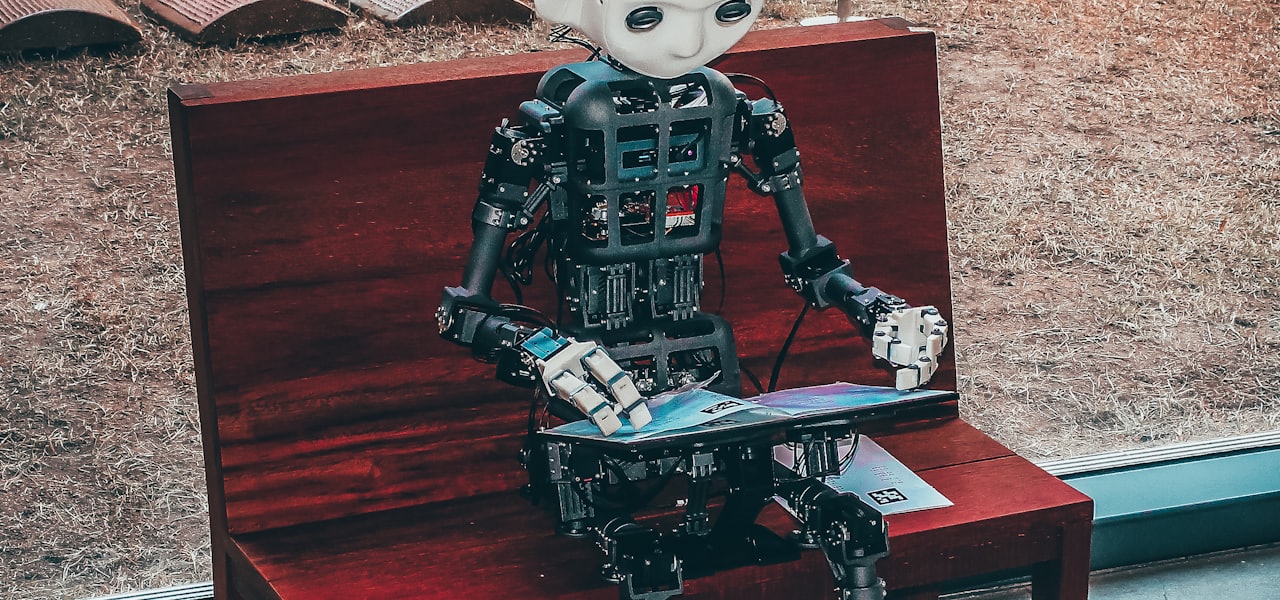
AI Avatar Male

AI Avatar Male — independent reviews, comparisons, pricing and step-by-step guides on Aizhi.

  • Color layout descriptor

    Color layout descriptor

    In digital image and video processing, a color layout descriptor (CLD) is designed to capture the spatial distribution of color in an image. The feature extraction process consists of two parts: grid based representative color selection and discrete cosine transform with quantization. Color is the most basic quality of the visual contents, therefore it is possible to use colors to describe and represent an image. The MPEG-7 standard has tested the most efficient procedure to describe the color and has selected those that have provided more satisfactory results. This standard proposes different methods to obtain these descriptors, and one tool defined to describe the color is the CLD, that permits describing the color relation between sequences or group of images. The CLD captures the spatial layout of the representative colors on a grid superimposed on a region or image. Representation is based on coefficients of the discrete cosine transform (DCT). This is a very compact descriptor being highly efficient in fast browsing and search applications. It can be applied to still images as well as to video segments. == Definition == The CLD is a very compact and resolution-invariant representation of color for high-speed image retrieval and it has been designed to efficiently represent the spatial distribution of colors. This feature can be used for a wide variety of similarity-based retrieval, content filtering and visualization. It is especially useful for spatial structure-based retrieval applications. This descriptor is obtained by applying the DCT transformation on a 2-D array of local representative colors in Y or Cb or Cr color space. The functionalities of the CLD are basically the matching: – Image-to-image matching – Video clip-to-video clip matching Remark that the CLD is one of the most precise and fast color descriptor. == Extraction == The extraction process of this color descriptor consists of four stages: Image partitioning Representative color selection DCT transformation Zigzag scanning The standard MPEG-7 recommends using the YCbCr color space for the CLD. === Image partitioning === In the image partitioning stage, the input picture (on RGB color space) is divided into 64 blocks to guarantee the invariance to resolution or scale. The inputs and outputs of this step are summarized in the following table: === Representative color selection === After the image partitioning stage, a single representative color is selected from each block. Any method to select the representative color can be applied, but the standard recommends the use of the average of the pixel colors in a block as the corresponding representative color, since it is simpler and the description accuracy is sufficient in general. The selection results in a tiny image icon of size 8x8. The next figure shows this process. Note that in the image of the figure, the resolution of the original image has been maintained only in order to facilitate its representation. The inputs and outputs of this stage are summarized in the next table: Once the tiny image icon is obtained, the color space conversion between RGB and YCbCr is applied. === DCT transformation === In the fourth stage, the luminance (Y) and the blue and red chrominance (Cb and Cr) are transformed by 8x8 DCT, so three sets of 64 DCT coefficients are obtained. To calculate the DCT in a 2D array, the formulas below are used. B p q = α p α q ∑ m = 0 M − 1 ∑ n = 0 N − 1 A m n cos ⁡ π ( 2 m + 1 ) p 2 M cos ⁡ π ( 2 n + 1 ) q 2 N , 0 ≤ p ≤ M − 1 , 0 ≤ q ≤ N − 1 {\displaystyle B_{pq}=\alpha _{p}\alpha _{q}\sum _{m=0}^{M-1}\sum _{n=0}^{N-1}A_{mn}\cos {\frac {\pi (2m+1)p}{2M}}\cos {\frac {\pi (2n+1)q}{2N}},\qquad 0\leq p\leq M-1,\;0\leq q\leq N-1} α p = { 1 M , p = 0 2 M , 1 ≤ p ≤ M − 1 α q = { 1 N , q = 0 2 N , 1 ≤ q ≤ N − 1 {\displaystyle \alpha _{p}={\begin{cases}{\frac {1}{\sqrt {M}}},&p=0\\{\sqrt {\frac {2}{M}}},&1\leq p\leq M-1\end{cases}}\qquad \alpha _{q}={\begin{cases}{\frac {1}{\sqrt {N}}},&q=0\\{\sqrt {\frac {2}{N}}},&1\leq q\leq N-1\end{cases}}} The inputs and outputs of this stage are summarized in the next table: === Zigzag scanning === A zigzag scanning is performed with these three sets of 64 DCT coefficients, following the schema presented in the figure. The purpose of the zigzag scan is to group the low frequency coefficients of the 8x8 matrix into a vector. The inputs and outputs of this stage are summarized in the next table: Finally, these three set of matrices correspond to the CLD of the input image. == Matching == The matching process helps to evaluate if two elements are equal comparing both elements and calculating the distance between them. In the case of color descriptors the matching process helps to evaluate if two images are similar. Its procedure is the following: – Given an image as an input, the application attempts to find an image with a similar descriptor in a data base of images. If we consider two CLDs: {DY, DCb, DCr} { DY‟, DCb‟, DCr‟ }, The distance between the two descriptors can be computed as: D = ∑ i w y i ( D Y i − D Y i ′ ) 2 + ∑ i w b i ( D C b i − D C b i ′ ) 2 + ∑ i w r i ( D C r i − D C r i ′ ) 2 {\displaystyle D={\sqrt {\sum _{i}w_{yi}(DY_{i}-DY_{i}')^{2}}}+{\sqrt {\sum _{i}w_{bi}(DCb_{i}-DCb_{i}')^{2}}}+{\sqrt {\sum _{i}w_{ri}(DCr_{i}-DCr_{i}')^{2}}}} The subscript i represents the zigzag-scanning order of the coefficients. Furthermore, notice that is possible to weight the coefficients (w) in order to adjust the performance of the matching process. These weights let us give to some components of the descriptor more importance than others. Observing the formula, it can be extracted that: – 2 images are the same if the distance is 0 – 2 images are similar if the distance is near to 0 Therefore, this matching process will let to identify images with similar color descriptors. Since the complexity of the similarity matching process shown above is low, high-speed image matching can be achieved.

    Read more →
  • DeepSeek

    DeepSeek

    Hangzhou DeepSeek Artificial Intelligence Basic Technology Research Co., Ltd., doing business as DeepSeek, is a Chinese artificial intelligence (AI) company that develops large language models (LLMs). Based in Hangzhou, Zhejiang, DeepSeek is owned and funded by High-Flyer, a Chinese hedge fund. DeepSeek was founded in July 2023 by Liang Wenfeng, the co-founder of High-Flyer, who also serves as the CEO for both of the companies. The company launched an eponymous chatbot alongside its DeepSeek-R1 model in January 2025. DeepSeek-R1 provided responses comparable to other contemporary large language models, such as OpenAI's GPT-4 and o1. Its training cost was reported to be significantly lower than other LLMs. The company claims that it trained its V3 model for US$6 million—far less than the US$100 million cost for OpenAI's GPT-4 in 2023—and using approximately one-tenth the computing power consumed by Meta's comparable model, Llama 3.1. DeepSeek's success against larger and more established rivals has been described as "upending AI". DeepSeek's models are described as "open-weight", meaning the exact parameters are openly shared, but the training data is not openly licensed. Since the January 2025 debut of DeepSeek-R1, the company has made its new models available under free and open-source software licenses, primarily the MIT License. The company reportedly recruits AI researchers from top Chinese universities and also hires from outside traditional computer science fields to broaden its models' knowledge and capabilities. DeepSeek significantly reduced training expenses for their R1 model by incorporating techniques such as mixture of experts (MoE) layers. The company also trained its models during ongoing trade restrictions on AI chip exports to China, using weaker AI chips intended for export and employing fewer units overall. Observers say this breakthrough sent "shock waves" through the industry which were described as triggering a "Sputnik moment" for the US in the field of artificial intelligence, particularly due to its open-source, cost-effective, and high-performing AI models. This threatened established AI hardware leaders such as Nvidia; Nvidia's share price dropped sharply, losing US$600 billion in market value, the largest single-company decline in U.S. stock market history. == History == === Founding and early years (2016–2023) === In February 2016, High-Flyer was co-founded by AI enthusiast Liang Wenfeng, who had been trading since the 2008 financial crisis while attending Zhejiang University. The company began stock trading using a GPU-dependent deep learning model on 21 October 2016; before then, it had used CPU-based linear models. By the end of 2017, most of its trading was driven by AI. Liang established High-Flyer as a hedge fund focused on developing and using AI trading algorithms, and by 2021 the firm was using AI exclusively, often using Nvidia chips. In 2019, the company began constructing its first computing cluster, Fire-Flyer, at a cost of 200 million yuan; it contained 1,100 GPUs interconnected at 200 Gbit/s and was retired after 1.5 years in operation. By 2021, Liang had started buying large quantities of Nvidia GPUs for an AI project, reportedly obtaining 10,000 Nvidia A100 GPUs before the United States restricted chip sales to China. Computing cluster Fire-Flyer 2 began construction in 2021 with a budget of 1 billion yuan. It was reported that in 2022, Fire-Flyer 2's capacity had been used at over 96%, totaling 56.74 million GPU hours. 27% was used to support scientific computing outside the company. During 2022, Fire-Flyer 2 had 5,000 PCIe A100 GPUs in 625 nodes, each containing 8 GPUs. At the time, it exclusively used PCIe instead of the DGX version of A100, since at the time the models it trained could fit within a single 40 GB GPU VRAM and so there was no need for the higher bandwidth of DGX (i.e., it required only data parallelism but not model parallelism). Later, it incorporated NVLinks and NCCL (Nvidia Collective Communications Library) to train larger models that required model parallelism. On 14 April 2023, High-Flyer announced the launch of an artificial general intelligence (AGI) research lab, stating that the new lab would focus on developing AI tools unrelated to the firm's financial business. Two months later, on 17 July 2023, that lab was spun off into an independent company, DeepSeek, with High-Flyer as its principal investor and backer. Venture capital investors were reluctant to provide funding, as they considered it unlikely that the venture would be able to quickly generate an "exit". === Model releases since 2023 === DeepSeek released its first model, DeepSeek Coder, on 2 November 2023, followed by the DeepSeek-LLM series on 29 November 2023. In January 2024, it released two DeepSeek-MoE models (Base and Chat), and in April 3 DeepSeek-Math models (Base, Instruct, and RL). DeepSeek-V2 was released in May 2024, followed a month later by the DeepSeek-Coder V2 series. In September 2024, DeepSeek V2.5 was introduced and revised in December. On 20 November 2024, the preview of DeepSeek-R1-Lite became available via chat. In December, DeepSeek-V3-Base and DeepSeek-V3 (chat) were released. On 20 January 2025, DeepSeek launched the DeepSeek chatbot—based on the DeepSeek-R1 model—free for iOS and Android. By 27 January, DeepSeek surpassed ChatGPT as the most downloaded freeware app on the iOS App Store in the United States, triggering an 18% drop in Nvidia's share price. On 24 March 2025, DeepSeek released DeepSeek-V3-0324 under the MIT License. On 28 May 2025, DeepSeek released DeepSeek-R1-0528 under the MIT License. The model has been noted for more tightly following official Chinese Communist Party ideology and censorship in its answers to questions than prior models. On 21 August 2025, DeepSeek released DeepSeek V3.1 under the MIT License. This model features a hybrid architecture with thinking and non-thinking modes. It also surpasses prior models like V3 and R1, by over 40% on certain benchmarks like SWE-bench and Terminal-bench. It was updated to V3.1-Terminus on 22 September 2025. V3.2-Exp was released on 29 September 2025. It uses DeepSeek Sparse Attention, a more efficient attention mechanism based on previous research published in February. DeepSeek-V3.2 was released on 1 December 2025, alongside a DeepSeek-V3.2-Speciale variant that focused on reasoning. In February 2026, Anthropic accused DeepSeek of using thousands of fraudulent accounts to generate millions of conversations with Claude to train its own large language models. In April 2026, investors began speaking with DeepSeek for a $300 million funding round, which would bring DeepSeek to a total valuation of $10 billion. On April 24, 2026, DeepSeek released a preview of its V4 series, including the 1.6-trillion parameter DeepSeek-V4-Pro and the 284-billion parameter DeepSeek-V4-Flash, both featuring a 1-million token context window, under the MIT License. DeepSeek's V4 LLM has been adopted by key semiconductor manufacturers and artificial intelligence chipmakers such as Huawei and Cambricon. == Company operation == DeepSeek is headquartered in Hangzhou, Zhejiang, and is owned and funded by High-Flyer. Its co-founder, Liang Wenfeng, serves as CEO. As of May 2024, Liang personally held an 84% stake in DeepSeek through two shell corporations. === Strategy === DeepSeek has stated that it focuses on research and does not have immediate plans for commercialization. This posture also means it can skirt certain provisions of China's AI regulations aimed at consumer-facing technologies. DeepSeek's hiring approach emphasizes skills over lengthy work experience, resulting in many hires fresh out of university. The company likewise recruits individuals without computer science backgrounds to expand the range of expertise incorporated into the models, for instance in poetry or advanced mathematics. According to The New York Times, dozens of DeepSeek researchers have or have previously had affiliations with People's Liberation Army laboratories and the Seven Sons of National Defence. Due to the impact of United States restrictions on chips, DeepSeek refined its algorithms to maximise computational efficiency and thereby leveraged older hardware and reduced energy consumption. DeepSeek also expanded on the African continent as it offers more affordable and less power-hungry AI solutions. The company has bolstered African language models and generated a number of startups, for example in Nairobi. Along with Huawei's storage and cloud computing services, the impact on the tech scene in sub-saharan Africa is considerable. DeepSeek offers local data sovereignty and more flexibility compared to Western AI platforms. == Training framework == High-Flyer/DeepSeek had operated at least two primary computing clusters: Fire-Flyer (萤火一号) and Fire-Flyer 2 (萤火二号). Fire-Flyer 1 was constructed in 2019 and was retired after 1.5 years of operation. Fi

    Read more →
  • Aurora (supercomputer)

    Aurora (supercomputer)

    Aurora is an exascale supercomputer that was sponsored by the United States Department of Energy (DOE) and designed by Intel and Cray for Argonne National Laboratory. It was briefly the second fastest supercomputer in the world from November 2023 to June 2024. The cost was estimated in 2019 to be US$500 million. Olivier Franza is the chief architect and principal investigator of this design. == History == In 2013 DOE presented a proposal for an "exascale" supercomputer, capable of speeds in the neighborhood of 1 exaFLOP (1018 floating point mathematical operations per second) with a maximum power consumption of 20 megawatts (MW) by 2020. Aurora was first announced in 2015 and to be finished in 2018. It was expected to have a speed of 180 petaFLOPS which would be around the speed of Summit. Aurora was meant to be the most powerful supercomputer at the time of its launch and to be built by Cray with Intel processors. Later, in 2017, Intel announced that Aurora would be delayed to 2021 but scaled up to 1 exaFLOP. In March 2019, DOE said that it would build the first supercomputer with a performance of one exaFLOP in the United States in 2021. In October 2020, DOE said that Aurora would be delayed again for a further six months, and would no longer be the first exascale computer in the US. In late October 2021 Intel announced that Aurora would now exceed 2 exaFLOPS in peak double-precision compute – That claim however never was realized. The system was fully installed on June 22, 2023. In May 2024, Aurora appeared at number two on the Top500 supercomputer list, with a performance of 1.012 exaFLOPS, marking the second entry of an exascale capable system on the Top500. == Usage == Functions include research on brain structure, nuclear fusion, low carbon technologies, subatomic particles, cancer and cosmology. It will also develop new materials that will be useful for batteries and more efficient solar cells. It is to be available to the general scientific community. == Architecture == Aurora has 10,624 nodes, with each node being composed of two Intel Xeon Max processors, six Intel Max series GPUs and a unified memory architecture, providing a maximum computing power of 130 teraFLOPS per node. It has around 10 petabytes of memory and 230 petabytes of storage. The machine is stated to consume around 39 MW of power. For comparison, the fastest computer in the world today, El Capitan uses 30 MW, while another Top 500 System, Frontier uses 24 MW.

    Read more →
  • Graphics Turing test

    Graphics Turing test

    In computer graphics the graphics Turing test is a variant of the Turing test, the twist being that a human judge viewing and interacting with an artificially generated world should be unable to reliably distinguish it from reality. The original formulation of the test is: "The subject views and interacts with a real or computer generated scene. The test is passed if the subject can not determine reality from simulated reality better than a random guess. (a) The subject operates a remotely controlled (or simulated) robotic arm and views a computer screen. (b) The subject enters a door to a controlled vehicle or motion simulator with computer screens for windows. An eye patch can be worn on one eye, as stereo vision is difficult to simulate." The "graphics Turing scale" of computer power is then defined as the computing power necessary to achieve success in the test. It was estimated in, as 1036.8 TFlops peak and 518.4 TFlops sustained. Actual rendering tests with a Blue Gene supercomputer showed that current supercomputers are not up to the task scale yet. A restricted form of the graphic Turing test has been investigated, where test subjects look into a box, and try to tell whether the contents are real or virtual objects. For the very simple case of scenes with a cardboard pyramid or a styrofoam sphere, subjects were not able to reliably tell reality and graphics apart.

    Read more →
  • Automate This

    Automate This

    Automate This: How Algorithms Came to Rule Our World is a book written by Christopher Steiner and published by Penguin Group. == Book == Steiner begins his study of algorithms on Wall Street in the 1980s but also provides examples from other industries. For example, he explains the history of Pandora Radio and the use of algorithms in music identification. He expresses concern that such use of algorithms may lead to the homogenization of music over time. Steiner also discusses the algorithms that eLoyalty (now owned by Mattersight Corporation following divestiture of the technology) was created by dissecting 2 million speech patterns and can now identify a caller's personality style and direct the caller with a compatible customer support representative. Steiner's book shares both the warning and the opportunity that algorithms bring to just about every industry in the world, and the pros and cons of the societal impact of automation (e.g. impact on employment).

    Read more →
  • SAS Viya

    SAS Viya

    SAS Viya is an artificial intelligence, analytics and data management platform developed by SAS Institute. == History == SAS Viya was released in 2016. The software was containerized with the release of Viya 4 in 2020. Viya has become one of SAS' most widely used platforms during the AI boom, as artificial intelligence becomes more widely used in business and computing. == Technical overview == The platform is cloud-native, and is executed on SAS's Cloud Analytics Services (CAS) engine. It is compatible with open source software, allowing users to build models using open sources tool such as R, Python and Jupyter. It integrates with major large language models like GPT-4 and Gemini Pro. The platform uses econometrics to create predictive models for forecasting scenarios based on complex data. It also has features for detecting algorithmic bias, auditing decisions and monitoring models. It is implemented through a low-code, no-code platform. The software is available on Amazon AWS Marketplace, Google Cloud, Red Hat OpenShift, and on Microsoft Azure Marketplace under a pay-as-you-use model. == Software == SAS Viya has released software as a service (SaaS) modules for creating AI content. These include Viya Workbench, Viya App Factory, Viya Copilot, and SAS Data Maker. The company also develops industry specific models, used by companies including Georgia-Pacific. == Applications == === Banking === The software is also widely used in business, especially in areas such as predictive modelling and fraud detection. === Insurance === SAS Viya is used in insurance for tasks such as actuarial analytics and modelling, as well as regulatory reporting. === Healthcare and life sciences === In 2023, the company introduced SAS Health, a common health data model built on the SAS Viya platform. AstraZeneca has partnered with SAS to use SAS Viya and SAS Life Science Analytics Framework in its delivery and approval processes. In 2024, SAS partnered with the University of Cambridge's Maxwell Center to use SAS Viya for healthcare research and development. === Public sector === SAS Viya is used in partnership with national and local governments to provide services and detect tax fraud. === Education === SAS Viya is used in research and education, particularly studies related to business intelligence, cybersecurity and data management. SAS Institute has partnered with educational institutions such as Appalachian State University, Clemson University, University of Arkansas, Stockholm University, and Marian University, to provide access to and training for using SAS Viya.

    Read more →
  • Common Crawl

    Common Crawl

    The Common Crawl Foundation (Common Crawl) is a nonprofit 501(c)(3) organization that crawls the web and freely provides its archives and datasets to the public. Common Crawl was founded by Gil Elbaz. The data had mostly been primarily used by researchers and some startups until the 2020s, when AI companies started training large language models using the data. In November 2025, an investigation by The Atlantic revealed that Common Crawl misled publishers when it claimed it respected paywalls in its scraping and it was not honoring requests from publishers to have their content removed from its databases. == History == Common Crawl was founded in 2007 in San Francisco. It began publishing its crawls in 2011. By 2013, sites like TinEye were building their products off of Common Crawl. The crawl reduces the reliance of companies and researchers on Google, which has the biggest dataset. Common Crawl was designed to have more and fresher data that was more efficient to analyze and utilize than the Wayback Machine created by the Internet Archive. By 2015, 1.8 billion webpages were on the Common Crawl, which started by crawling a list of URLs donated by the search engine Blekko. They use Amazon Web Services, which provides some of its services for free, allowing computing costs to average $2-4000/month. The Common Crawl website listed 30 studies based on Common Crawl data. Before 2023, Common Crawl was not very well known outside of academic researchers who utilize the data. Common Crawl received its first requests to redact information in 2023 and increasingly started seeing its crawler, CCBot, blocked. In 2023, it began receiving significant financial support from AI companies, including Anthropic and OpenAI, each of which donated $250,000. It was also used to train Google DeepMind's large language model Gemini. By April 2023, Common Crawl was capturing 3.1 billion webpages, with an estimated 5% of pages before 2021 containing hate speech or slurs. As of 2024, Common Crawl had been cited in more than 10,000 academic studies. By 2024, The Pile and Common Crawl had been the two main training datasets being used to train AI models. In November 2025, an investigation by technology journalist Alex Reisner for The Atlantic revealed that Common Crawl misled publishers when it claimed it respected paywalls in its scraping and when it said that it was honoring requests from publishers to have their content removed from its databases. It included misleading results in the public search function on its website that showed no entries for websites that had requested their archives be removed, when in fact those sites were still included in its scrapes used by AI companies. As of 2025, Reisner found that CCBot was the most widely-blocked bot by the top 1000 websites. A 2026 article in LWN.net discussed an advantage to services like Common Crawl being that it can limit the scraping costs to websites by allowing companies and researchers to download the data from Common Crawl instead of scraping it themselves. In April 2026, Common Crawl experimentally began to distribute its data through Hugging Face Storage Bucket, in addition to its standard storage on Amazon S3. == Organization == Peter Norvig and Joi Ito have served on the advisory board. Rich Skrenta is the executive director. It has received funding almost exclusively from the Elbaz Family Foundation Trust until 2023 when it started receiving donations from the AI industry. == Refined versions == A number of organizations take raw Common Crawl data and refine it into datasets that exclude edgy content or are otherwise higher-quality for their purposes, such as FineWeb, DCLM and C4. === Colossal Clean Crawled Corpus === Google version of the Common Crawl is called the Colossal Clean Crawled Corpus, or C4 for short. It was constructed for the training of the T5 language model series in 2019. As of 2023, there were some concerns over copyrighted content in the C4 as well as racist content. A 2024 study found that 45% of content was explicitly restricted by websites' terms of service to be used for purposes like AI training by for-profit companies.

    Read more →
  • Simulation decomposition

    Simulation decomposition

    SimDec, or Simulation decomposition, is a hybrid uncertainty and sensitivity analysis method, for visually examining the relationships between the output and input variables of a computational model. SimDec maps multivariable scenarios onto the distribution of the model output. This visual analytics approach exposes the underlying nature of the model behavior, including its nonlinear and multivariate interaction effects. SimDec can be used in any range of science, engineering, and social domains. Existing applications include business and environmental issues. == Method == SimDec operates on Monte Carlo simulation (or measured) data where both output and input values are recorded. At least one thousand observations (or simulated iterations) are typically recommended to preserve the readability of the resulting histograms. An outline of the decomposition algorithm, which is readily available in multiple programming languages, proceeds as follows: Select the input variables for decomposition. One can use sensitivity indices (see variance-based sensitivity analysis) to define the most influential variables for decomposition or choose them manually according to the decision-problem context (for example, only those input variables that the decision-maker can act upon). Two to three input variables, ordered by decreasing value of their sensitivity indices, usually provide the most meaningful decomposition results. Divide the inputs into states. The numeric ranges of the inputs are split into several intervals with an equal number of observations in each. For categorical variables, the categories represent states. Form scenarios. All combinations of states of the selected input variables produce unique scenarios or subsets of the data. For example, if the range of X2 is divided into low, medium and high, and X3 takes values of 1 or 2, six scenarios are formed: (i) X2 low & X3 = 1, (ii) X2 low & X3 = 2, (iii) X2 medium & X3 = 1, (iv) X2 medium & X3 = 2, (v) X2 high & X3 = 1, and (vi) X2 high & X3 = 2. Assign scenarios to each output value. The simulation data is used to define the scenario index for each simulation run. For example, if an X2 value falls into the low state and X3 is equal to 2, the corresponding scenario, defined in Step 3, is (ii). Color-code the output distribution. When all output values are assigned scenario indices, they are plotted as series in a stacked histogram, visually separated by color-coding. For ease of visual perception, the states of the most influential input variable are assigned distinct colors, and all the remaining partitions take shades of those colors (see Figure). All of these steps can be run automatically on the given data using the open-source SimDec packages currently available in Python, R, Julia, and Matlab. A SimDec template in Excel runs a Monte Carlo simulation of a spreadsheet model but possesses only a manual option for input selection. == How to read SimDec == === Histogram === Histogram is an approximate representation of the distribution of numerical data. Its horizontal axis shows the range of the variable of interest, and its vertical axis denotes count, also called frequency, or, if divided by the total number of data points, probability. The distribution alone can supply only limited information about the data – its minimum, maximum, and shape (where the most of data occurs). === Judging the importance of inputs === If an input variable has no effect on the output, its states (e.g., low & high) would lie on top of each other on the SimDec histogram, occupying fully overlapping ranges of the output. If an input variable has a strong effect and explains most of the variance of the output, the border between its states on the SimDec histogram would be vertical. Such visualization has an important decision-making implication – e.g., if the high state of X can be achieved, it would guarantee a certain range of Y. All cases in-between with low-to-strong effects would show a diagonal border between the states. The less they overlap, the larger the effect of X on Y. While the horizontal displacement of sub-distributions on the SimDec histogram is the key to interpreting the results, the vertical disposition of sub-distributions is just a technical matter of the order of plotting the series of the stacked histogram. === Exploring the interaction of inputs === When two or more input variables are used for decomposition, it becomes possible to examine their joint effects. A schematic visualization portrays how different types of joint effects of input variables on the output appear on SimDec visualization. Understanding the nature of interaction effects in a computational model and its behavior in general is crucial for effective decision-making. == Limitations == The SimDec method has several limitations: It is based on Monte Carlo simulation and thus requires running a computational model a thousand of times or more. To models that take hours to evaluate once, it would be impossible to use SimDec (unless a supercomputer and/or large of time are available). SimDec is based on a histogram, thus, for binary or categorical output variables, the visualization would be very limited (e.g., only a few bins). The more input variables one selects for the decomposition, the less readable the histogram becomes. Only cases with two and three input variables are presented in.

    Read more →
  • Macromedia FreeHand

    Macromedia FreeHand

    Macromedia FreeHand (formerly Aldus FreeHand) is a discontinued computer application for creating two-dimensional vector graphics oriented primarily to professional illustration, desktop publishing and content creation for the Web. FreeHand was similar in scope, intended market, and functionality to Adobe Illustrator, CorelDRAW and Xara Designer Pro. Because of FreeHand's dedicated page layout and text control features, it also compares to Adobe InDesign and QuarkXPress. Professions using FreeHand include graphic design, illustration, cartography, fashion and textile design, product design, architects, scientific research, and multimedia production. FreeHand was created by Altsys Corporation in 1988 and licensed to Aldus Corporation, which released versions 1 through 4. In 1994, Aldus merged with Adobe Systems and because of the overlapping market with Adobe Illustrator, FreeHand was returned to Altsys by order of the Federal Trade Commission. Altsys was later bought by Macromedia, which released FreeHand versions 5 through 11 (FreeHand MX). In 2005, Adobe Systems acquired Macromedia and its product line which included FreeHand MX, under whose ownership it presently resides. Since 2003, FreeHand development has been discontinued; in the Adobe Systems catalog, FreeHand has been replaced by Adobe Illustrator. FreeHand MX continues to run under Windows 11 and under Mac OS X 10.6 (Snow Leopard) within Rosetta, a PowerPC code emulator, and requires a registration patch supplied by Adobe. FreeHand 10 runs without problems on Mac OS X Snow Leopard with Rosetta enabled, and does not require a registration patch. Later versions of macOS can use a Mac OS X Snow Leopard Server virtual machine to emulate the required PowerPC support. == History == === Altsys and Aldus FreeHand === In 1984, James R. Von Ehr founded Altsys Corporation to develop graphics applications for personal computers. Based in Plano, Texas, the company initially produced font editing and conversion software; Fontastic Plus, Metamorphosis, and the Art Importer. Their premier PostScript font-design package, Fontographer, was released in 1986 and was the first such program on the market. With the PostScript background having been established by Fontographer, Altsys also developed FreeHand (originally called Masterpiece) as a Macintosh Postscript-based illustration program that used Bézier curves for drawing and was similar to Adobe Illustrator. FreeHand was announced as "... a Macintosh graphics program described as having all the features of Adobe's Illustrator plus drawing tools such as those in Mac Paint and Mac Draft and special effects similar to those in Cricket Draw." Seattle's Aldus Corporation acquired a licensing agreement with Altsys Corporation to release FreeHand along with their flagship product, Pagemaker, and Aldus FreeHand 1.0 was released in 1988. FreeHand's product name used intercaps; the F and H were capitalized. The partnership between the two companies continued with Altsys developing FreeHand and with Aldus controlling marketing and sales. After 1988, a competitive exchange between Aldus FreeHand and Adobe Illustrator ensued on the Macintosh platform with each software advancing new tools, achieving better speed, and matching significant features. Windows PC development also allowed Illustrator 2 (aka, Illustrator 88 on the Mac) and FreeHand 3 to release Windows versions to the graphics market. FreeHand 1.0 sold for $495 in 1988. It included the standard drawing tools and features as other draw programs including special effects in fills and screens, text manipulation tools, and full support for CMYK color printing. It was also possible to create and insert PostScript routines anywhere within the program. FreeHand performed in preview mode instead of keyline mode but performance was slower. FreeHand 2.0 sold for $495 in 1989. Besides improving on the features of FreeHand 1.0, FreeHand 2 added faster operation, Pantone colors, stroked text, flexible fill patterns and automatically import graphic assets from other programs. It added accurate control over a color monitor screen display, limited only by its resolution. FreeHand 3.0 sold for $595 in 1991. New features included resizable color, style, and layer panels including an Attributes menu. Also tighter precision of both the existing tools and aligning of objects. FH3 created compound Paths. Text could be converted to paths, applied to an ellipse, or made vertical. Carried over from version 1.0, FreeHand 3 suffered by having text entered into a dialog box instead of directly to the page. In October 1991, a 3.1 upgrade made FreeHand work with System 7 but additionally, it supported pressure-sensitive drawing which offered varying line widths with a users stroke. It improved element manipulation and added more import/export options. FreeHand 4.0 sold for $595 in 1994. Altsys ported FreeHand 3.0 to the NeXT system creating a new program named Virtuoso. Virtuoso continued its development at Altsys and version 2.0 of Virtuoso was feature-equivalent to FreeHand 4 (with the addition of NeXT-specific features such as Services and Display PostScript) and file compatible, with Virtuoso 2 able to open FreeHand 4 files and vice versa. A prominent feature of this version was the ability to type directly into the page and wrap inside or outside any shape. It also included drag-and-drop color imaging, a larger pasteboard, and a user interface that featured floating, rollup panels. The colors palette included a color mixer for adding new colors to the swatch list. Speed increases were made. In the same year of FreeHand 4 release, Adobe Systems announced merger plans with Aldus Corporation for $525 million. Fear about the end of competition between these two leading applications was reported in the media and expressed by customers (Illustrator versus FreeHand and Adobe Photoshop versus Aldus PhotoStyler.) Because of this overlapping of the market, Altsys stepped in by suing Aldus, saying that the merger deal was "a prima facie violation of a non-compete clause within the FreeHand licensing agreement." Altsys CEO Jim Von Ehr explained, "No one loves FreeHand more than we do. We will do whatever it takes to see it survive." The Federal Trade Commission issued a complaint against Adobe Systems on October 18, 1994, ordering a divestiture of FreeHand to "remedy the lessening of competition resulting from the acquisition as alleged in the Commission's complaint," and further, the FTC ordering, "That for a period of ten (10) years from the date on which this order becomes final, respondents shall not, without the prior approval of the Commission, directly or indirectly, through subsidiaries, partnerships, or otherwise .. Acquire any Professional Illustration Software or acquire or enter into any exclusive license to Professional Illustration Software;" (referring to FreeHand.) FreeHand was returned to Altsys with all licensing and marketing rights as well as Aldus FreeHand's customer list. === Macromedia Freehand === By late 1994, Altsys still retained all rights to FreeHand. Despite brief plans to keep it in-house to sell it along with Fontographer and Virtuoso, Altsys reached an agreement with the multimedia software company, Macromedia, to be acquired. This mutual agreement provided FreeHand and Fontographer a new home with ample resources for marketing, sales, and competition against the newly merged Adobe-Aldus company. Altsys would remain in Richardson, Texas, but would be renamed as the Digital Arts Group of Macromedia and was responsible for the continued development of FreeHand. Macromedia received FreeHand's 200,000 customers and expanded its traditional product line of multimedia graphics software to illustration and design graphics software. CEO James Von Ehr became a Macromedia vice-president until 1997 when he left to start another venture. FreeHand 5.0 sold for $595 in 1995. This version featured a more customizable and expanded workspace, multiple views, stronger design and editing tools, a report generator, spell check, paragraph styles, multicolor gradient fills up to 64 colors, speed improvements, and it accepted Illustrator plugins. In September 1995, a 5.5 upgrade added Photoshop plug-in support, PDF import capabilities, the Extract feature, inline graphics to text, improved auto-expanding text containers, the Crop feature, and the Create PICT Image feature. A FreeHand 5.5 upgrade was part of the FreeHand Graphics Studio (a suite that included Fontographer, Macromedia xRes image editing application, and Extreme 3D animation and modeling application). FreeHand 6.0 in 1996. This version only existed in beta. Some Freehand 7 prerelease versions were released under the Freehand 6 tag. FreeHand 7.0 sold for $399 in 1996, or $449 as part of the FreeHand Graphics Studio (see above.) Features included a redesigned user interface that allowed recombining Inspectors, Panel Tabs, Dockable Panels, Smart Cursors,

    Read more →
  • Seeing AI

    Seeing AI

    Seeing AI is an artificial intelligence application developed by Microsoft for iOS. Seeing AI uses the device camera to identify people and objects, and then the app audibly describes those objects for visually impaired people. == Capabilities == Seeing AI is primarily used to describe short text, documents, products, people, currency scenery, colors, handwriting and light. The app can scan a barcode to describe a product and uses sounds to assist the user in focusing on the barcode. When the app describes people, it attempts to estimate the person's age, gender, and emotional status. Additionally, in a test run by German journalists in December 2019, Seeing AI apparently used some sort of facial recognition system to identify people on photographs by name. Some functions are performed on the device, however more complex functions such as describing a scene or recognizing handwriting require an Internet connection. In December 2017, Seeing AI introduced the ability for currency recognition for US and Canadian dollar, British pounds and Euros. In December 2019, Seeing AI added support for five more languages, Dutch, French, German, Japanese, Spanish. Seeing AI is available in 70 countries such as Brazil, Argentina, Australia, Canada, Egypt, Albania, Bhutan, etc. Supported on iPhone 5C, 5S and later best performance with iPhone 6S, SE and later models

    Read more →
  • Unified Modeling Language

    Unified Modeling Language

    The Unified Modeling Language (UML) is a general-purpose, object-oriented, visual modeling language that provides a way to visualize the architecture and design of a system, similar to the function of a blueprint. UML defines notation for many types of diagrams which focus on aspects such as behavior, interaction, and structure. UML is both a formal metamodel and a collection of graphical templates. The metamodel defines the elements in an object-oriented model such as classes and properties. It is essentially the same thing as the metamodel in object-oriented programming (OOP), however for OOP, the metamodel is primarily used at run time to dynamically inspect and modify an application object model. The UML metamodel provides a mathematical, formal foundation for the graphic views used in the modeling language to describe an emerging system. UML was created in an attempt to define a standard language for object-oriented programming at the OOPSLA '95 Conference. Originally, Grady Booch and James Rumbaugh merged their models into a unified model. This was followed by Booch's company Rational Software purchasing Ivar Jacobson's Objectory company and merging their model into the UML. At the time Rational and Objectory were two of the dominant players in the small world of independent vendors of object-oriented tools and methods. The Object Management Group (OMG) then took ownership of UML. The creation of UML was motivated by the desire to standardize the disparate nature of notational systems and approaches to software design at the time. In 1997, UML was adopted as a standard by the Object Management Group (OMG) and has been managed by this organization ever since. In 2005, UML was also published by the International Organization for Standardization (ISO) and the International Electrotechnical Commission (IEC) as the ISO/IEC 19501 standard. Since then the standard has been periodically revised to cover the latest revision of UML. Most developers do not use UML per se, but instead produce more informal diagrams, often hand-drawn. These diagrams, however, often include elements from UML. == Use == UML is primarily used for software development (in any industry or domain) but also used outside elsewhere including business processes, system functions, database schemas, workflow in the legal systems, medical electronics, Health care systems, and hardware design.. The UML is used by the OMG itself to define other OMG products such as the Unified Architecture Framework (UAF) and the Systems Modelling Language (SysML) v1. UML is designed for use with many object-oriented software development methods, both today and for the methods when it was first developed – including OMT, Booch method, Objectory, and especially RUP, which it was originally intended to be used with when work began at Rational Software. Although originally intended for object-oriented design documentation, UML has been used effectively in other contexts such as modeling business process. As UML is not inherently linked to a particular programming language, it can be used for modeling a system independent of language. Some UML tools generate source code from a UML model. === Elements === UML diagrams support visualizing system aspects like: Use case diagram for specifying user interactions with systems Class diagram for specifying structures, including data structures Activity diagram for specifying business process workflows Component diagram for specifying how components interface with other components Deployment diagram for specifying how components are deployed and executed on computational nodes In addition to syntactical (notational) elements with well-defined semantics, UML diagrams also allow for free-form comments (notes) that explain aspects such as usage, constraints, and intents. === Sharing === UML models can be exchanged among UML tools via the XML Metadata Interchange (XMI) format. === Cardinality notation === As with database Chen, Bachman, and ISO ER diagrams, class models are specified to use "look-across" cardinalities, even though several authors (Merise, Elmasri & Navathe, amongst others) prefer same-side or "look-here" for roles and both minimum and maximum cardinalities. Recent researchers (Feinerer and Dullea et al.) have shown that the "look-across" technique used by UML and ER diagrams is less effective and less coherent when applied to n-ary relationships of order strictly greater than 2. Feinerer says: "Problems arise if we operate under the look-across semantics as used for UML associations. Hartmann investigates this situation and shows how and why different transformations fail.", and: "As we will see on the next few pages, the look-across interpretation introduces several difficulties which prevent the extension of simple mechanisms from binary to n-ary associations." === Artifacts === An artifact is the "specification of a physical piece of information that is used or produced by a software development process, or by deployment and operation of a system" including models, source code, scripts, executables, tables in database systems, development deliverables, a design documents, and email messages. An artifact is the physical entity that is deployed to a node. Other UML elements such as classes and components are first manifest into artifacts and instances of these artifacts are then deployed. Artifacts can be composed of other artifacts. === Metamodeling === The OMG developed a metamodeling architecture to define UML, called the Meta-Object Facility (MOF). MOF is designed as a four-layered architecture, as shown in the image at right. It provides a meta-meta model at the top, called the M3 layer. This M3-model is the language used by Meta-Object Facility to build metamodels, called M2-models. The most prominent example of a Layer 2 Meta-Object Facility model is the UML metamodel, which describes UML itself. These M2-models describe elements of the M1-layer, and thus M1-models. These would be, for example, models written in UML. The last layer is the M0-layer or data layer. It is used to describe runtime instances of the system. The metamodel can be extended using a mechanism called stereotyping. This has been criticized as being insufficient/untenable by Brian Henderson-Sellers and Cesar Gonzalez-Perez in "Uses and Abuses of the Stereotype Mechanism in UML 1.x and 2.0". == Diagrams == UML 2 defines many types of diagrams – shown as a taxonomy in the image. === Structure diagrams === Structure diagrams emphasize the structure of the system – using objects, classifiers, relationships, attributes and operations. They are used to document software architecture. Class diagram – Describes the structure of a class Component diagram – Describes how a software system is split into components and dependencies between the components Composite structure diagram Deployment diagram Object diagram Package diagram Profile diagram === Behavior diagrams === Behavior diagrams emphasize the behavior of a system by showing collaborations among objects and changes to the internal states of objects. They are used to describe the functionality of a system. Activity diagram – Describes the business and operational activities of components State machine diagram Use case diagram – Depicts of a user's interaction with a system === Interaction diagrams === Interaction diagrams, a subset of behavior diagrams, emphasize the flow of control and data between components of a system. Communication diagram – shows communication between components Interaction overview diagram Sequence diagram – shows interactions arranged in time sequence; can be drawn via tools such as Lucidchart and Draw.io Timing diagram – focuses on timing constraints === Examples === == Adoption == In 2013, UML had been marketed by OMG for many contexts, but aimed primarily at software development with limited success. It has been treated, at times, as a design silver bullet, which leads to problems. UML misuse includes overuse (designing every part of the system with it, which is unnecessary) and assuming that novices can design with it. It is considered a large language, with many constructs. Some people (including Jacobson) feel that UML's size hinders learning and therefore uptake. Visual Studio removed support for UML in 2016 due to lack of use. == History == UML has evolved since the second half of the 1990s and has its roots in the object-oriented programming methods developed in the late 1980s and early 1990s. The image shows a timeline of the history of UML and other object-oriented modeling methods and notation. === Origin === Rational Software hired James Rumbaugh from General Electric in 1994 and after that, the company became the source for two of the most popular object-oriented modeling approaches of the day: Rumbaugh's object-modeling technique (OMT) and Grady Booch's method. They were soon assisted in their efforts by Ivar Jacobson, the creator of the object-oriented software engineeri

    Read more →
  • Mike Vernal

    Mike Vernal

    Mike Vernal (born September 7, 1980) is an American business executive who is a venture capitalist at Conviction. He was previously an investor at Sequoia Capital in Silicon Valley and was one of the top executives at Facebook between 2008 and 2016. Prior to joining Sequoia Capital, he was Vice President of Search, Local, and Developer products at Facebook. == Career == Vernal joined Facebook in 2008. From 2009 to 2013, Vernal managed the Facebook Platform team and is credited with managing the Facebook Platform transition from desktop to mobile. During his time at Facebook, he served as vice president and was considered among the “top executives” who ran the company. In 2016, after eight years at Facebook, Vernal announced his plans to leave the company. In May 2016, he joined Sequoia Capital, a venture-capital firm specializing in technology startups. He is an early investor in Rippling, Clay, Notion and Statsig. In July 2023, The Information reported that Vernal was departing Sequoia. At Conviction, he has led investments in Listen Labs, OpenEvidence and Thinking Machines Lab.

    Read more →
  • Adobe Prelude

    Adobe Prelude

    Adobe Prelude was an ingest and logging software application for tagging media with metadata for searching, post-production workflows, and footage lifecycle management. Adobe Prelude is also made to work closely with Adobe Premiere Pro. It is part of the Adobe Creative Cloud and is geared towards professional video editing alone or with a group. The software also offers features like rough cut creation. A speech transcription feature was removed in December 2014. == History == Adobe announced that on April 23, 2012 Adobe OnLocation would be shut down and Adobe Prelude would launch on May 7, 2012. Adobe stated OnLocation's production was stopping because of the growing trend in the industry toward tapeless, native workflows, Adobe stresses that Adobe Prelude is not a direct replacement for OnLocation. Adobe OnLocation was available in CS5 but not in CS6 and Adobe Prelude is only available in CS6. Adobe still offers technical support for OnLocation. In 2021, Adobe announced they would be discontinuing Adobe Prelude, starting by removing it from their website on September 8, 2021. Support for existing users will continue through September 8, 2024. == Features == Prelude is used to tag media, log data, create and export metadata and generate rough cuts that can be sent to Adobe Premiere Pro. A user can add a tag to a piece of media that will show up on Premiere Pro or if another user opens that media with Prelude. Ingest Footage Prelude can ingest all kinds of file types. Once ingested, Prelude can duplicate, transcode and verify the files. Log Footage Prelude can log data only using the keyboard. Create Rough Cuts Prelude is able to generate Rough Cuts. Rough Cuts are a combination of sub clips that will hold any metadata a user feeds into it. Rough cuts can hold metadata such as markers and comments, and this metadata will stay on this footage. Workflow Accessibility Prelude is an XMP - based open platform that allows for custom integration into many video editing platforms. == Features from OnLocation == Many features from Adobe OnLocation went to Adobe Prelude or Adobe Premiere Pro. Adobe OnLocation thrived on tape - based cameras and setting up a shot before shooting it, with the change in the industry, this problem is irrelevant in post production. Adobe OnLocation also allowed the user to add tags and scripting metadata that would carry over to Premiere Pro. OnLocation also had a Media Browser pane, which is the standard for any Adobe program today, Prelude has this Media Browser as well. == Prelude Live Logger == Prelude Live Logger is an application integrated with Prelude CC. Prelude Live Logger is designed to capture notes to use during video logging and editing while you shoot footage on an iPad's camera. Editors can import and combine this metadata with footage from Prelude throughout editing to facilitate various tasks.

    Read more →
  • Group concept mapping

    Group concept mapping

    Group concept mapping is a structured methodology for organizing the ideas of a group on any topic of interest and representing those ideas visually in a series of interrelated maps. It is a type of integrative mixed method, combining qualitative and quantitative approaches to data collection and analysis. Group concept mapping allows for a collaborative group process with groups of any size, including a broad and diverse array of participants. Since its development in the late 1980s by William M.K. Trochim at Cornell University, it has been applied to various fields and contexts, including community and public health, social work, health care, human services,, instructional interventions, and biomedical research and evaluation. == Overview == Group concept mapping integrates qualitative group processes with multivariate analysis to help a group organize and visually represent its ideas on any topic of interest through a series of related maps. It combines the ideas of diverse participants to show what the group thinks and values in relation to the specific topic of interest. It is a type of structured conceptualization used by groups to develop a conceptual framework, often to help guide evaluation and planning efforts. Group concept mapping is participatory in nature, allowing participants to have an equal voice and to contribute through various methods. A group concept map visually represents all the ideas of a group and how they relate to each other, and depending on the scale, which ideas are more relevant, important, or feasible. == Process == Group concept mapping involves a structured multi-step process, including brainstorming, sorting and rating, multidimensional scaling and cluster analysis, and the generation and interpretation of multiple maps. The first step requires participants to brainstorm a large set of statements relevant to the topic of interest, usually in response to a focus prompt. Participants are then asked to individually sort those statements into categories based on their perceived similarity and rate each statement on one or more scales, such as importance or feasibility. The data is then analyzed using The Concept System software, which creates a series of interrelated maps using multidimensional scaling (MDS) of the sort data, hierarchical clustering of the MDS coordinates applying Ward's method, and the computation of average ratings for each statement and cluster of statements. The resulting maps display the individual statements in two-dimensional space with more similar statements located closer to each other, and grouped into clusters that partition the space on the map. The Concept System software also creates other maps that show the statements in each cluster rated on one or more scales, and absolute or relative cluster ratings between two cluster sets. As a last step in the process, participants are led through a structured interpretation session to better understand and label all the maps. == History == Group concept mapping was developed as a methodology in the late 1980s by William M.K. Trochim at Cornell University. Trochim is considered to be a leading evaluation expert, and he has taught evaluation and research methods at Cornell since 1980. Originally called "concept mapping", the methodology has evolved since its inception with the maturation of the field and the continued advancement of the software, which is now a Web application. == Uses == Group concept mapping can be used with any group for any topic of interest. It is often used by government agencies, academic institutions, national associations, not-for-profit and community-based organizations, and private businesses to help turn the ideas of the group into measurable actions. This includes in the areas of organizational development, strategic planning, needs assessment, curriculum development, research, and evaluation. Group concept mapping is well-documented, well-established methodology, and it has been used in hundreds of published papers. == Versus concept mapping and mind mapping == More generally, concept mapping is any process used for visually representing relationships between ideas in pictures or diagrams. A concept map is typically a diagram of multiple ideas, often represented as boxes or circles, linked in a graph (network) structure through arrows and words where each idea is connected to another. The technique was originally developed in the 1970s by Joseph D. Novak at Cornell University. Concept mapping may be done by an individual or a group. A mind map is a diagram used to visually represent information, centering on one word or idea with categories and sub-categories radiating off of it in a tree structure. Popularized by Tony Buzan in the 1970s, mind mapping is often a spontaneous exercise done by an individual or group to gather information about what they think around a single topic. Unlike Novak's concept maps and Buzan's mind maps, group concept mapping has a structured mathematical process (sorting and rating, multidimensional scaling and cluster analysis) for organizing and visually representing multiple ideas of a group through a series of specific steps. In other words, in group concept mapping, the resulting visual representations are mathematically generated from mixed (qualitative and quantitative) data collected from a group of research subjects, whereas in Novak's concept maps and Buzan's mind maps the visual representations are drawn directly by the subjects resulting in diagrams that are qualitative data and final product at the same time.

    Read more →
  • Knowledge Engineering Environment

    Knowledge Engineering Environment

    Knowledge Engineering Environment (KEE) is a frame-based development tool for expert systems. It was developed and sold by IntelliCorp, and was first released in 1983. It ran on Lisp machines, and was later ported to Lucid Common Lisp with the CLX library, an X Window System (X11) interface for Common Lisp. This version was available on several different UNIX workstations. On KEE, several extensions were offered: Simkit, a frame-based simulation library KEEconnection, database connection between the frame system and relational databases In KEE, frames are called units. Units are used for both individual instances and classes. Frames have slots and slots have facets. Facets can describe, for example, a slot's expected values, its working value, or its inheritance rule. Slots can have multiple values. Behavior can be implemented using a message passing model. KEE provides an extensive graphical user interface (GUI) to create, browse, and manipulate frames. KEE also includes a frame-based rule system. In the KEE knowledge base, rules are frames. Both forward chaining and backward chaining inference are available. KEE supports non-monotonic reasoning through the concepts of worlds. Worlds allow providing alternative slot-values of frames. Through an assumption-based truth or reason maintenance system, inconsistencies can be detected and analyzed. ActiveImages allows graphical displays to be attached to slots of Units. Typical examples are buttons, dials, graphs, and histograms. The graphics are also implemented as Units via KEEPictures, a frame-based graphics library.

    Read more →